Rapid Detection of Anthocyanin Content in Black Goji Berries
Black goji berries, perennial shrubs native to East Asia and Europe, are celebrated for their sweetness, nutritional value, and health benefits, including anti-aging and immune-boosting properties attributed to anthocyanin. Given that anthocyanin content is a key quality indicator, there is a pressing need for a rapid, cost-effective detection method.
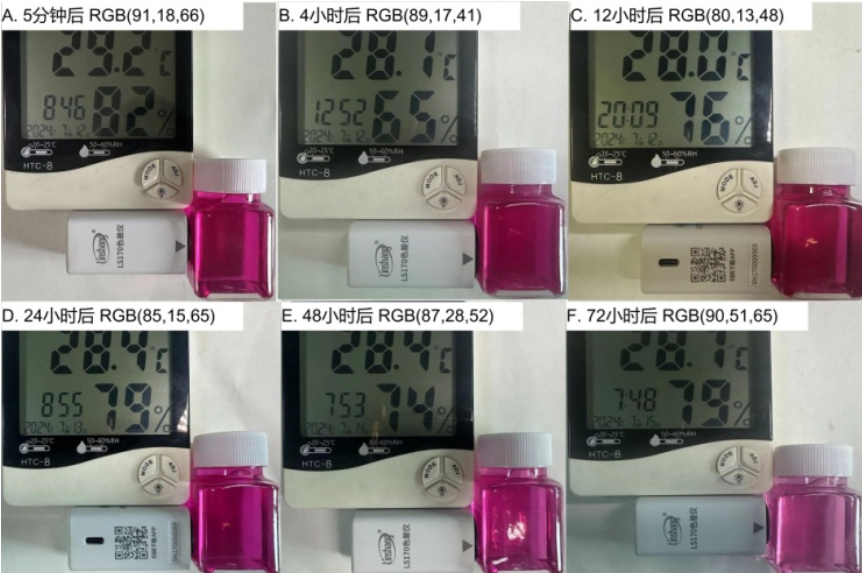
Traditional methods such as pH differential and UV-Visible spectroscopy are complex and time-consuming. We propose a novel approach leveraging anthocyanin’s color variability under different pH levels. Black goji berry powder exhibits distinct colors—red in acidic, purple in neutral, and blue in alkaline solutions—which remains stable in 60% acidified ethanol.
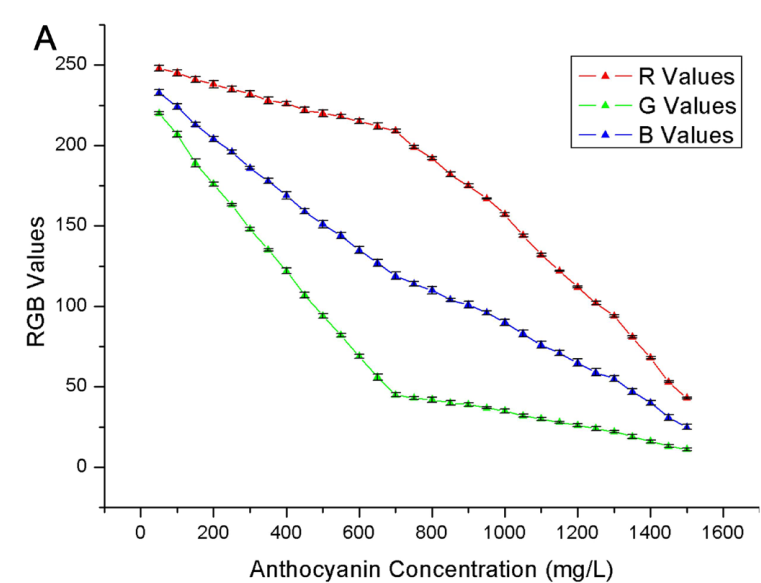
Based on the Beer-Lambert Law, which correlates absorbance with concentration, we hypothesize a direct relationship between anthocyanin levels and RGB values. We developed a quantitative colorimetric detector comprising a color sensor, microprocessor, and LCD display. This device captures RGB values from solutions, processes them to determine anthocyanin concentrations, and displays results.
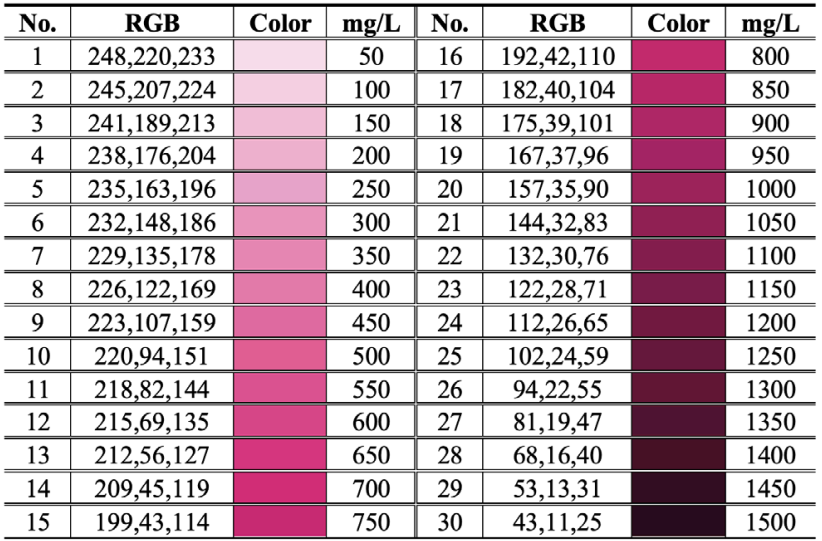
Two methods were devised: RGB spatial distance analysis and standard curve fitting. The first method compares sample RGB values against pre-measured color cards to identify the closest match, enabling rapid quantification.
The second method constructs a standard curve using the G value, which shows a linear correlation with anthocyanin concentration below 700 mg/L. This curve, with a high correlation coefficient (r=0.99946), facilitates accurate quantification within this range.
Our approach offers convenience and cost-effectiveness, making it suitable for scenarios requiring quick measurements, such as purchasing high-anthocyanin berries. While slightly less accurate than traditional methods, it provides a viable alternative for field applications, promoting broader use of black goji berries.
Our research findings have been published in Journal of Emerging Investigators, https://doi.org/10.59720/24-091, emerginginvestigators.org/articles/24-091/pdf
Additionally, we produced a documentary to record the entire research process.