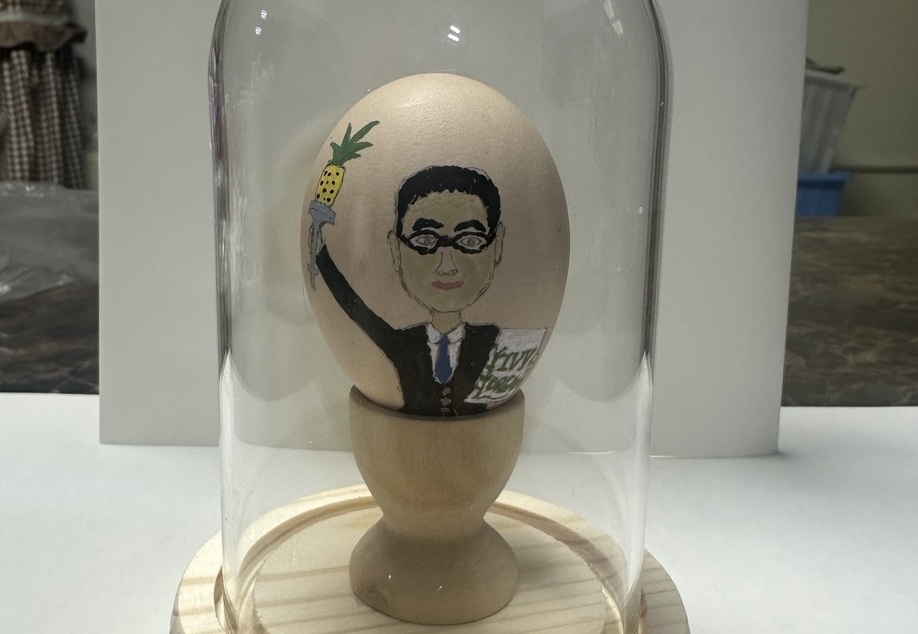
I. Historical Origins
The history of eggshell painting can be traced back to the Spring and Autumn Period in China. Early eggshell paintings, known as “colored egg paintings,” were often used as festival gifts. For example, during the Dragon Boat Festival, people would paint “Five Poisons” patterns on eggshells to ward off evil spirits and invite good fortune. As the craft evolved, eggshells gradually transformed from everyday items into artistic carriers, becoming renowned traditional handicrafts during the Qing Dynasty and even being exported abroad.
II. Craftsmanship
The production process of eggshell painting is meticulous and complex, involving multiple steps:
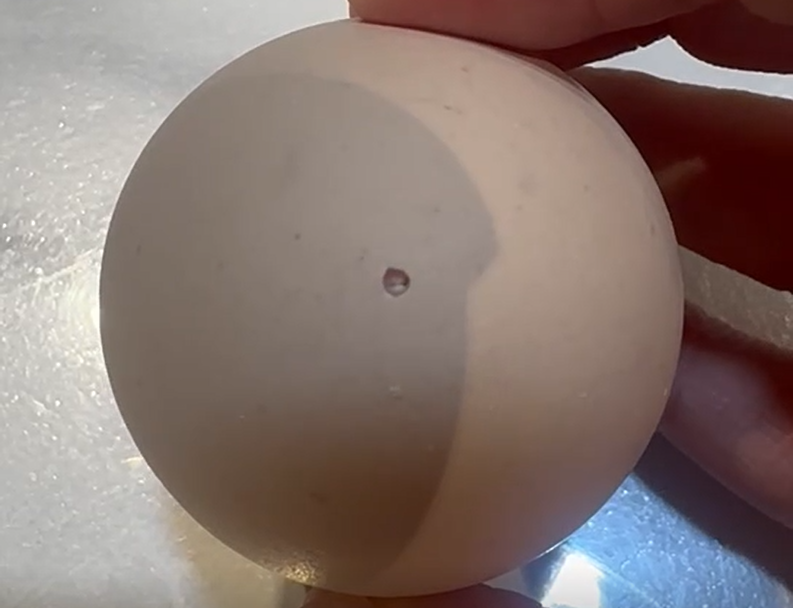
Egg Selection and Preparation: Eggs from birds such as pigeons, chickens, ducks, geese, and ostriches are selected. I usually choose duck eggs. A vacuum needle is used to extract the egg contents, which are then rinsed with clean water and dried. The processed eggshells have a delicate texture and a translucent, white appearance, making them ideal for painting.
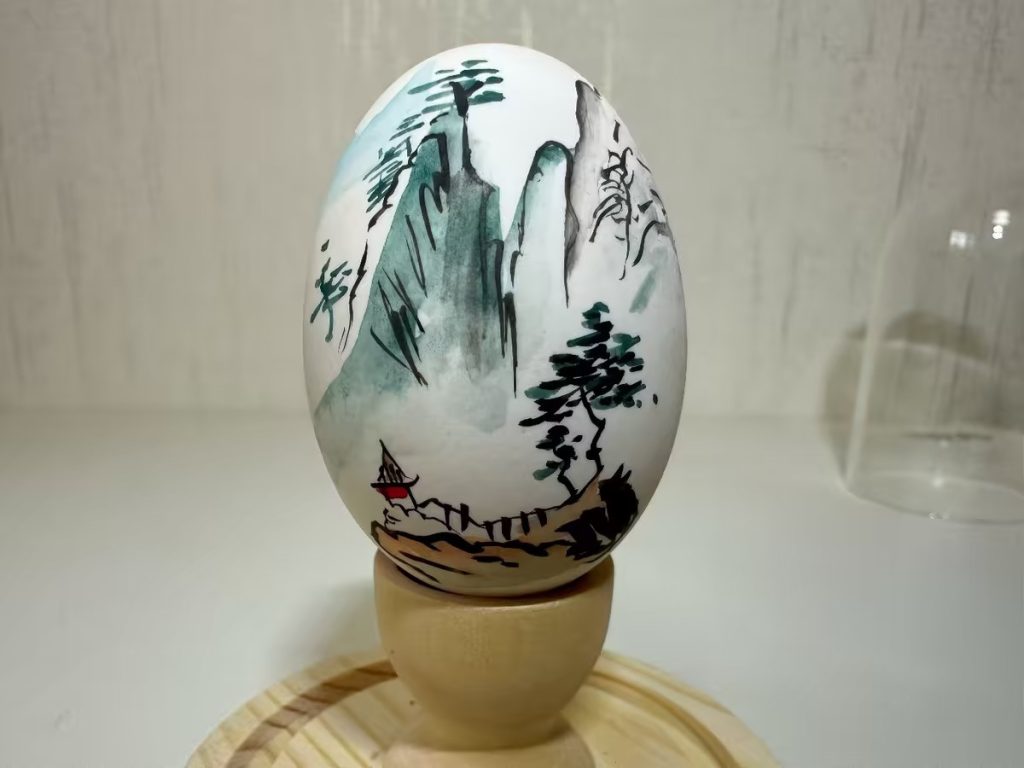
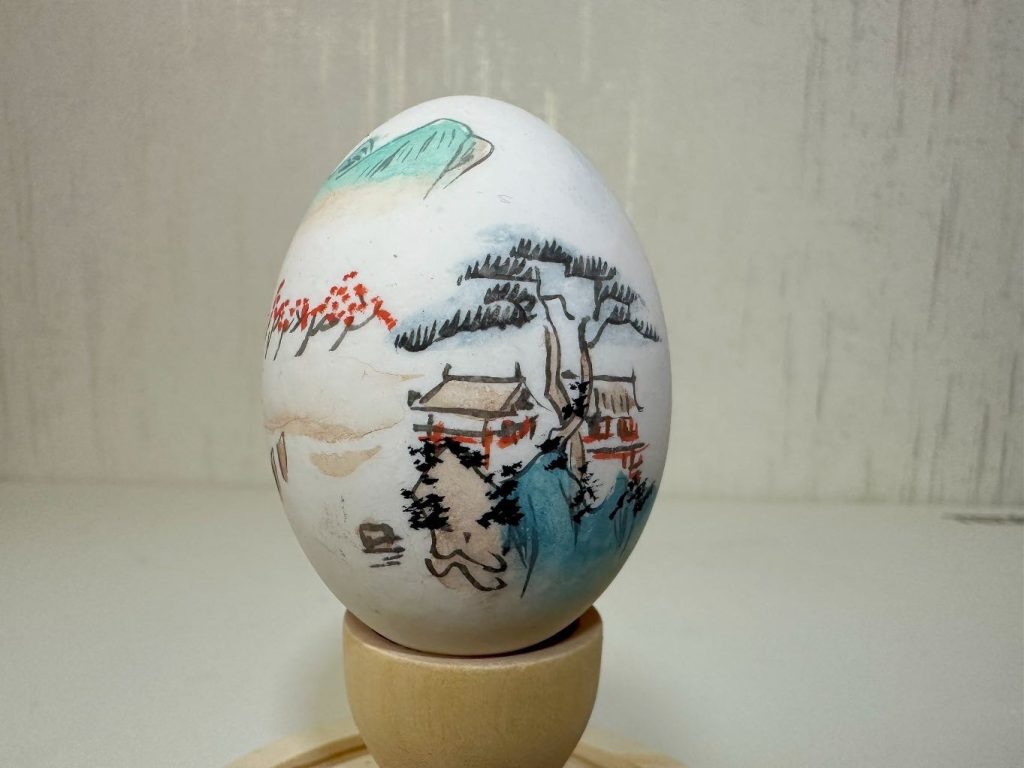
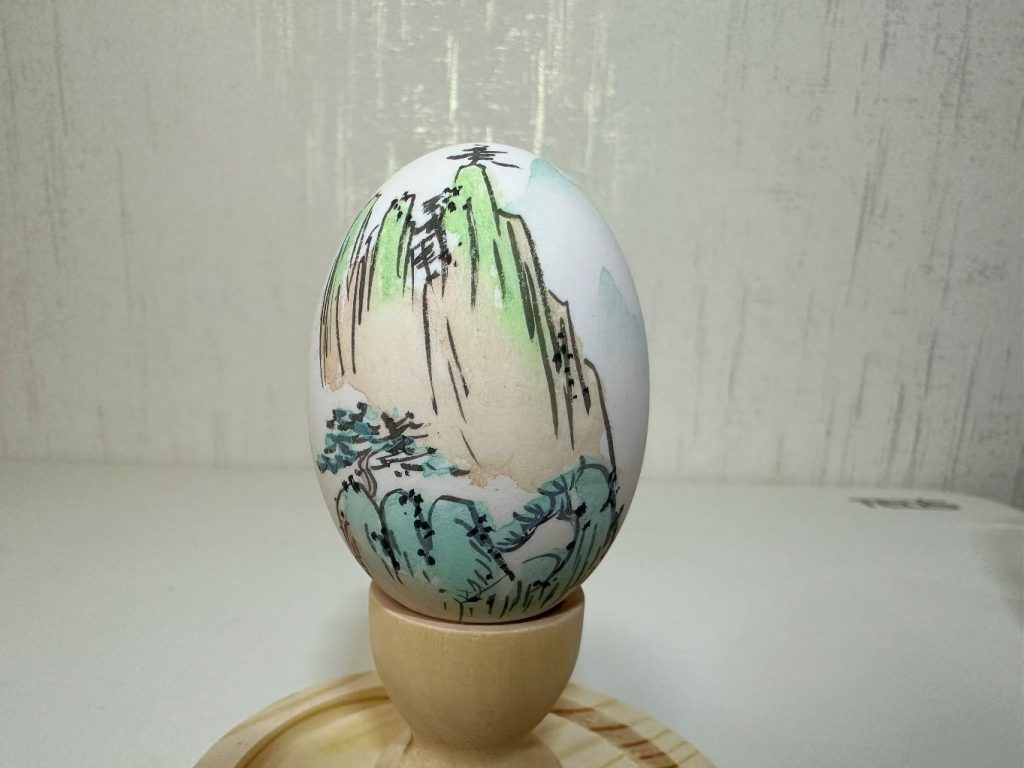
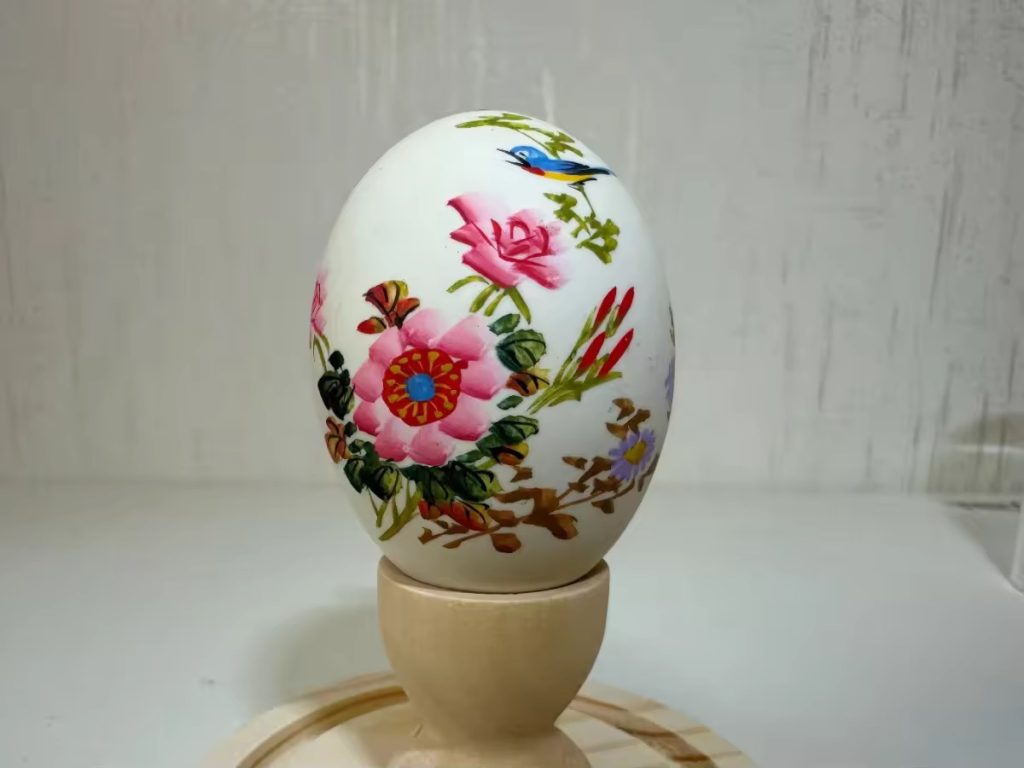
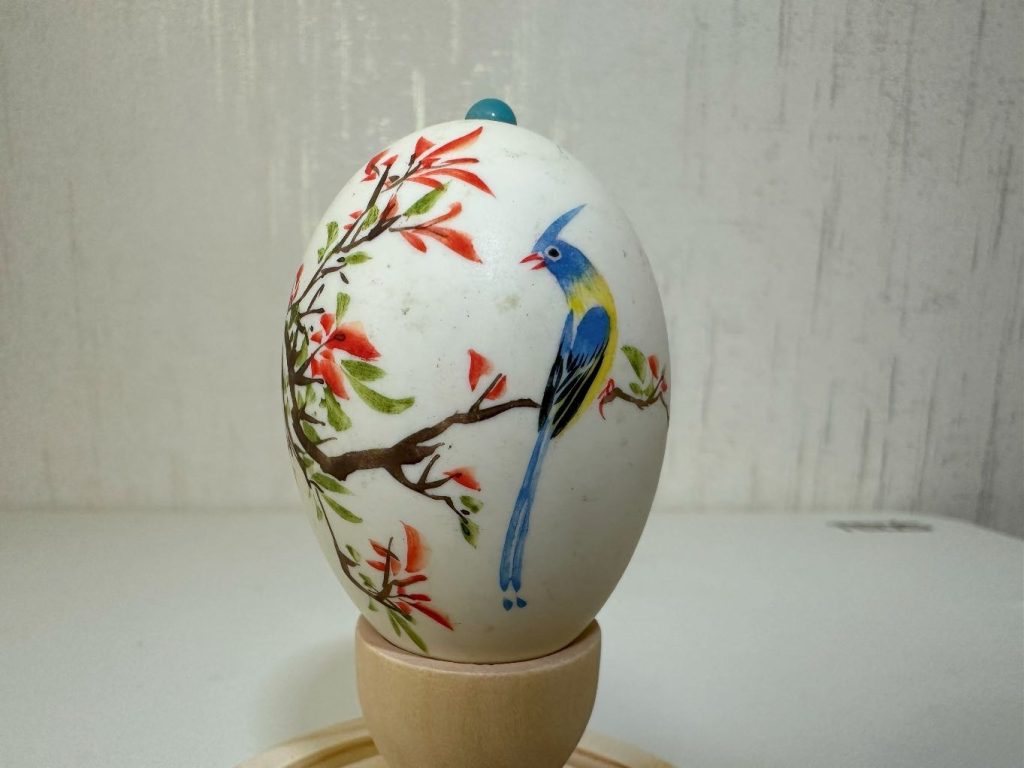
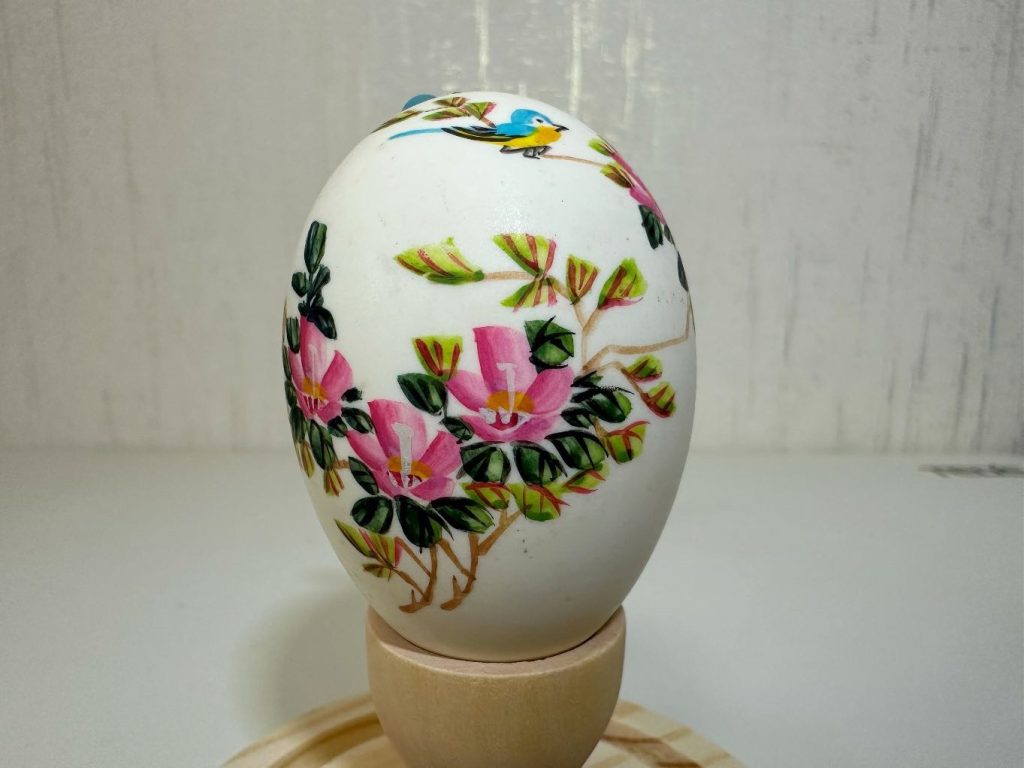
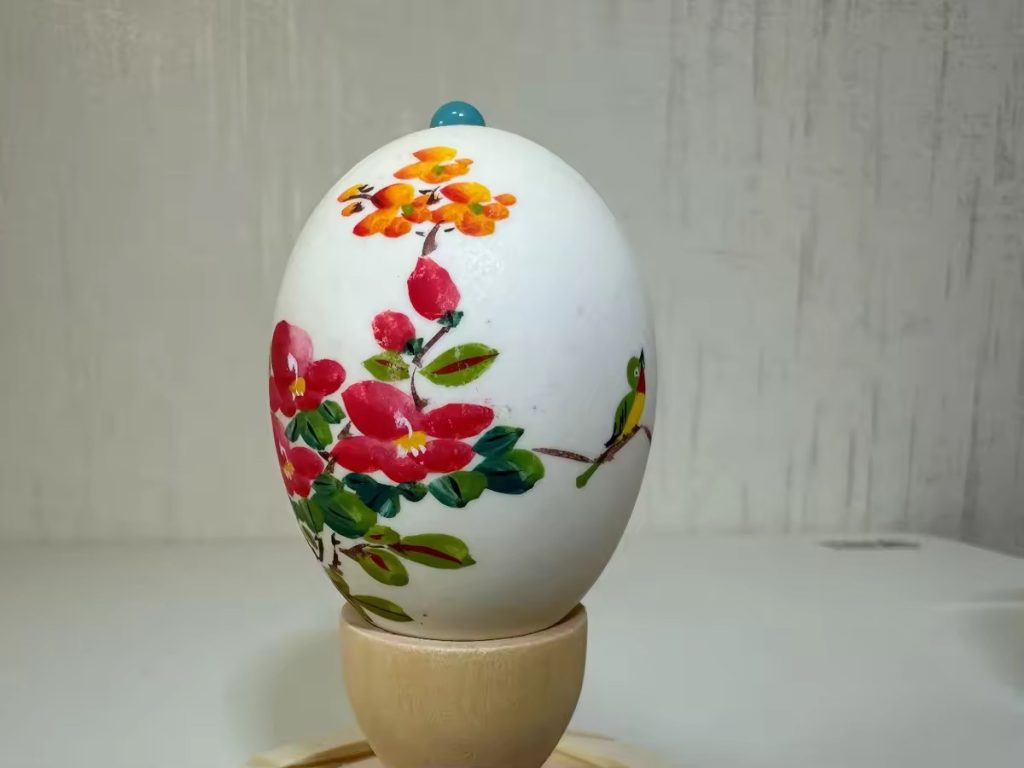
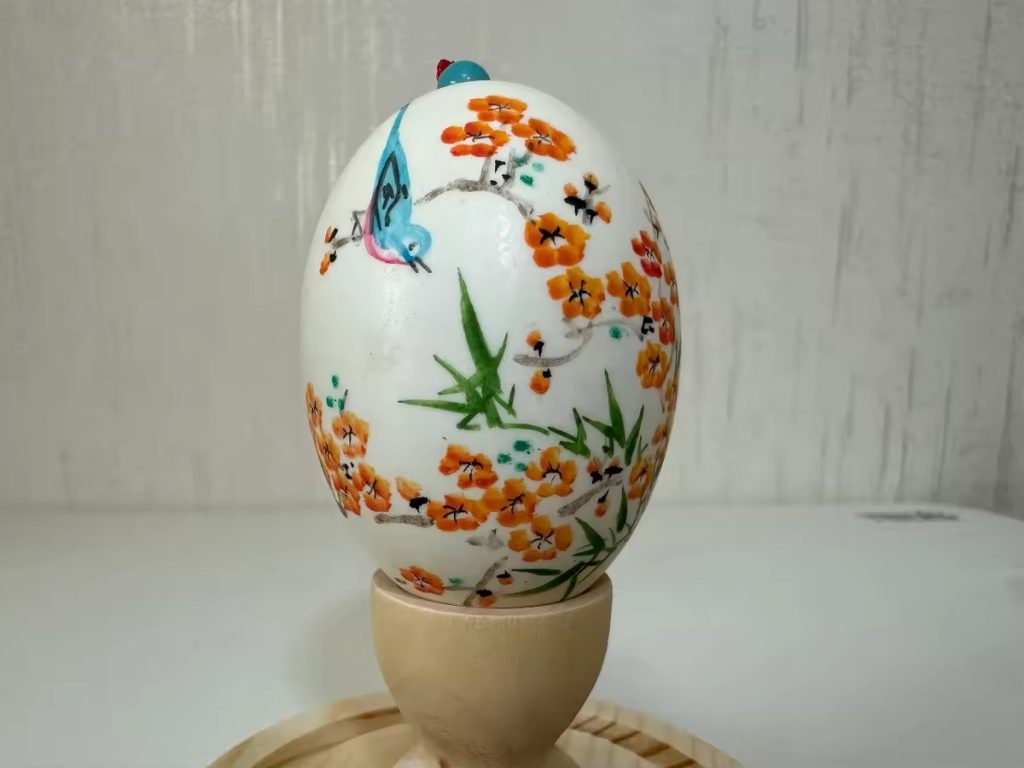
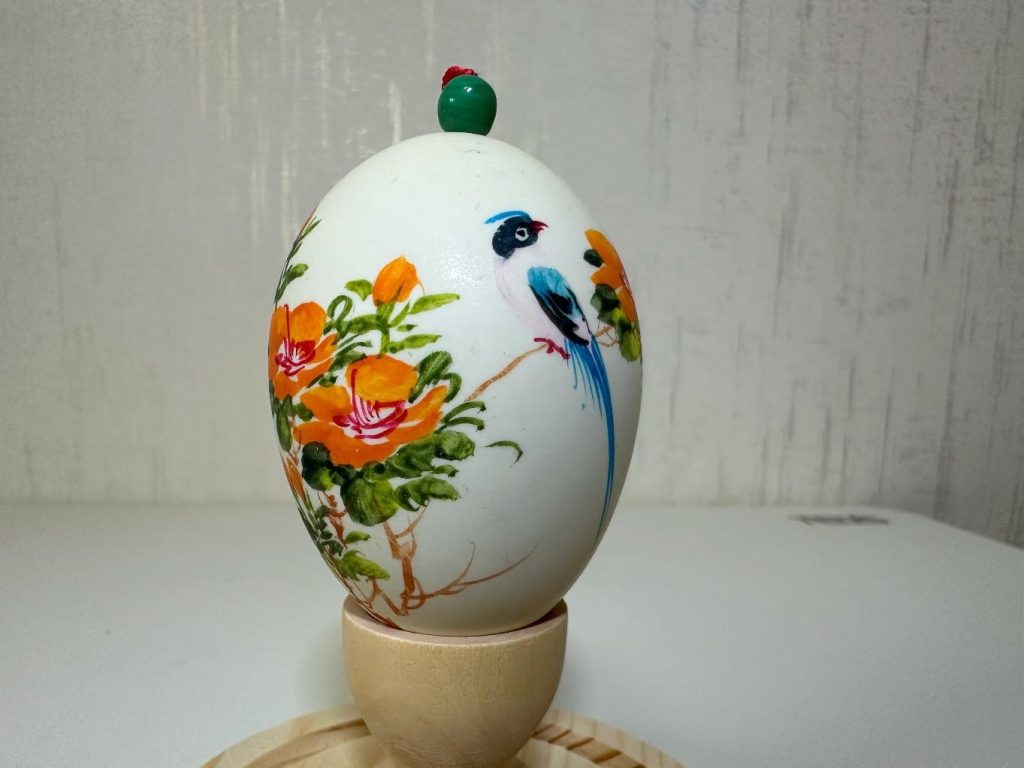
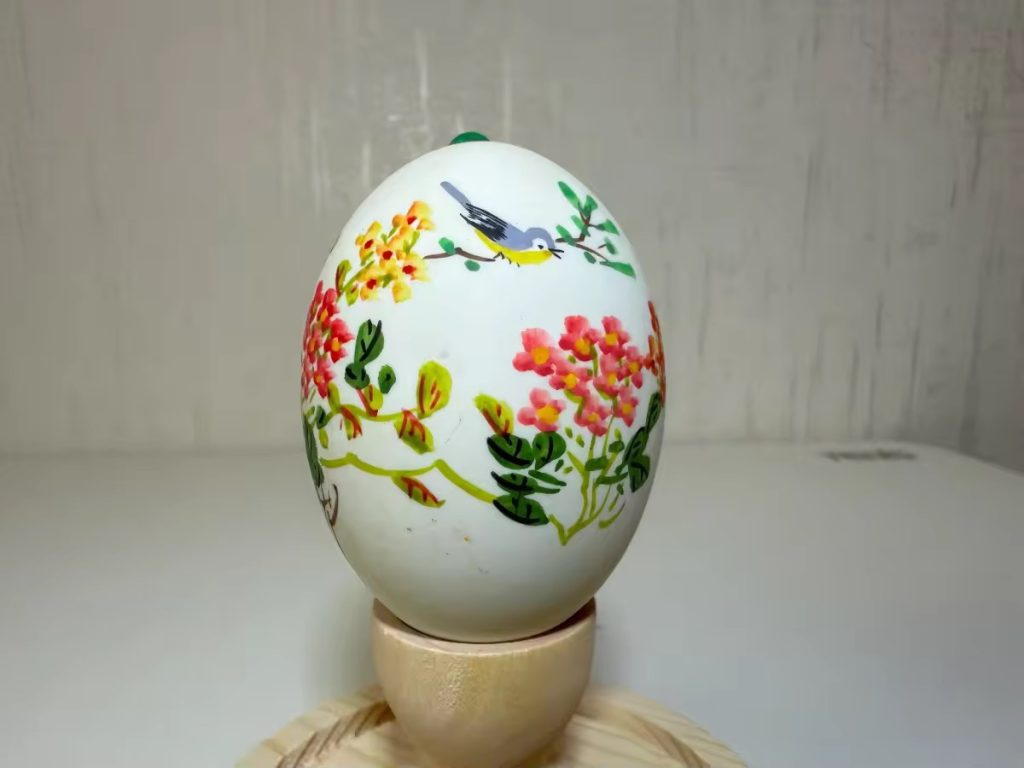
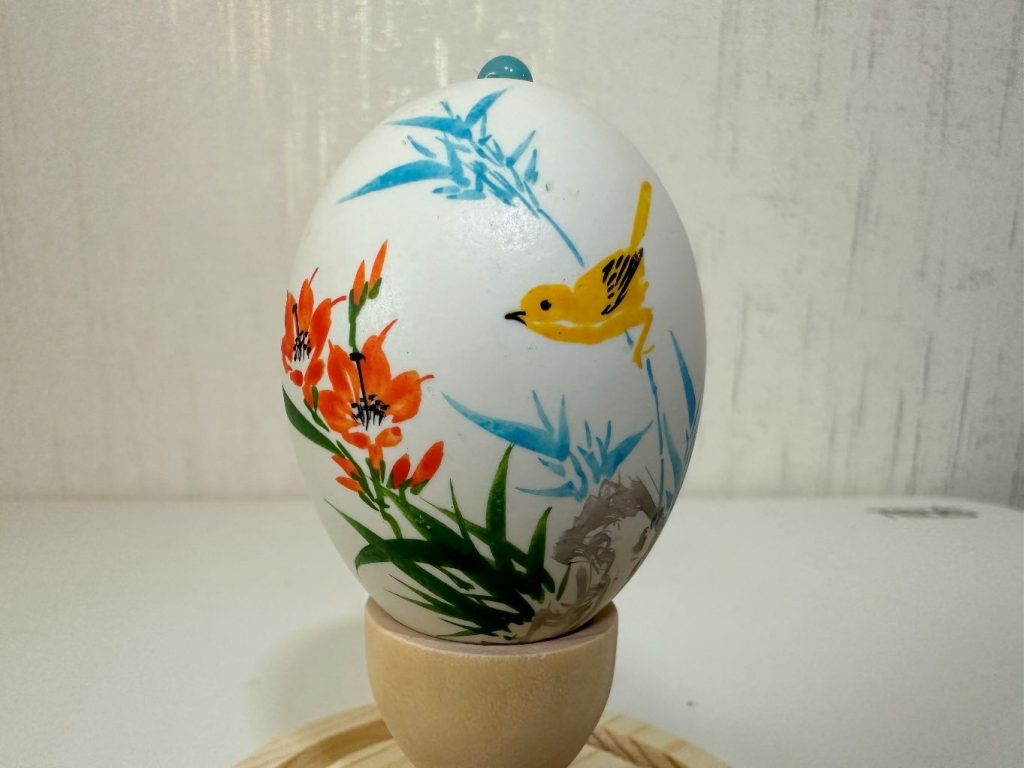
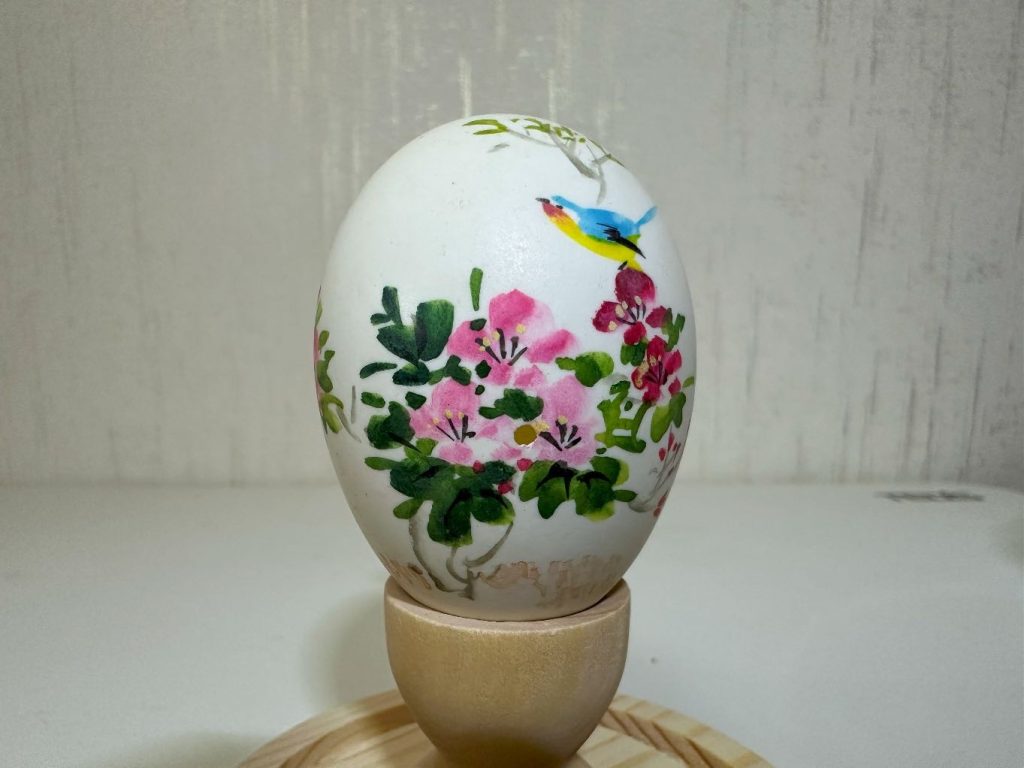
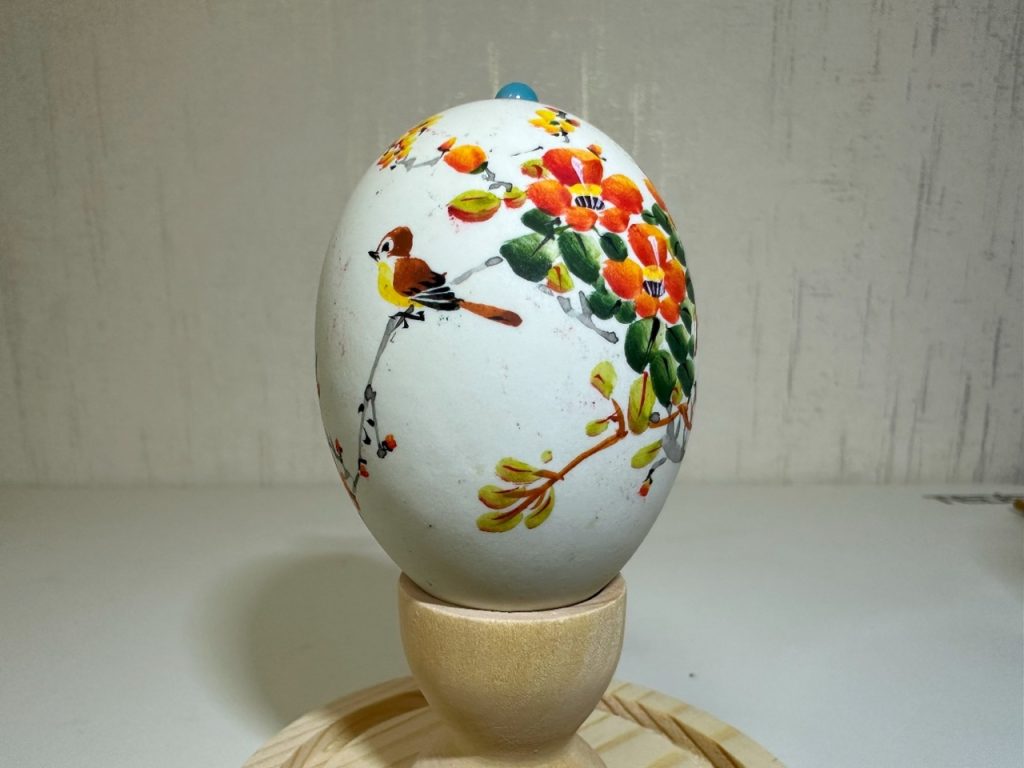
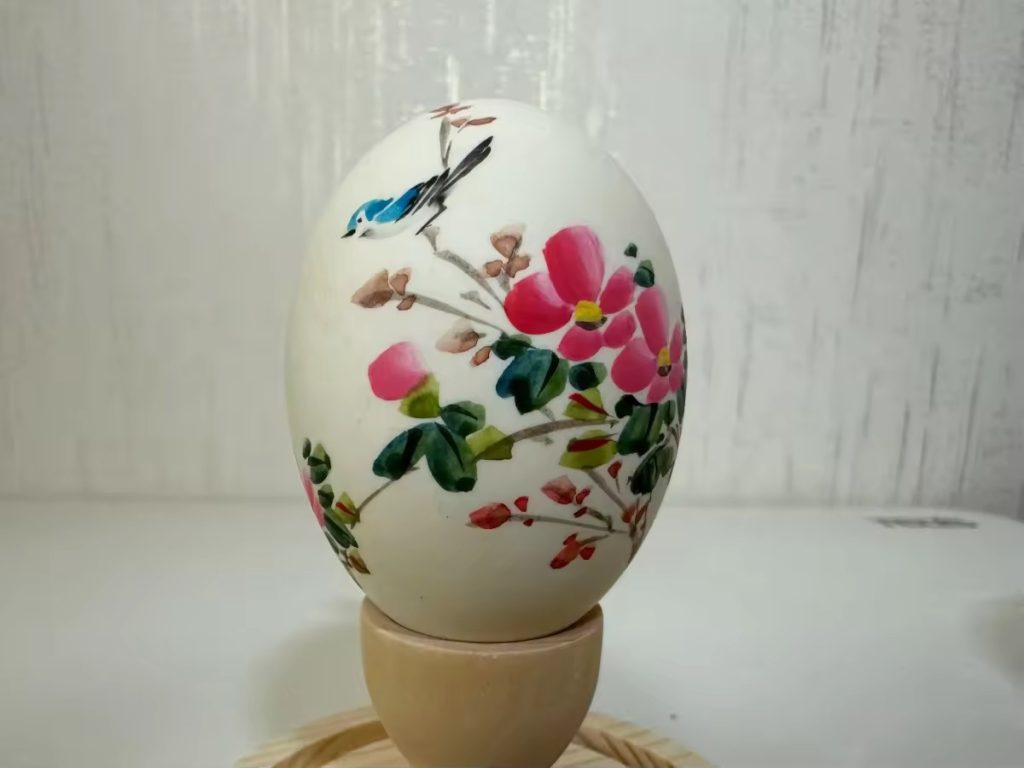
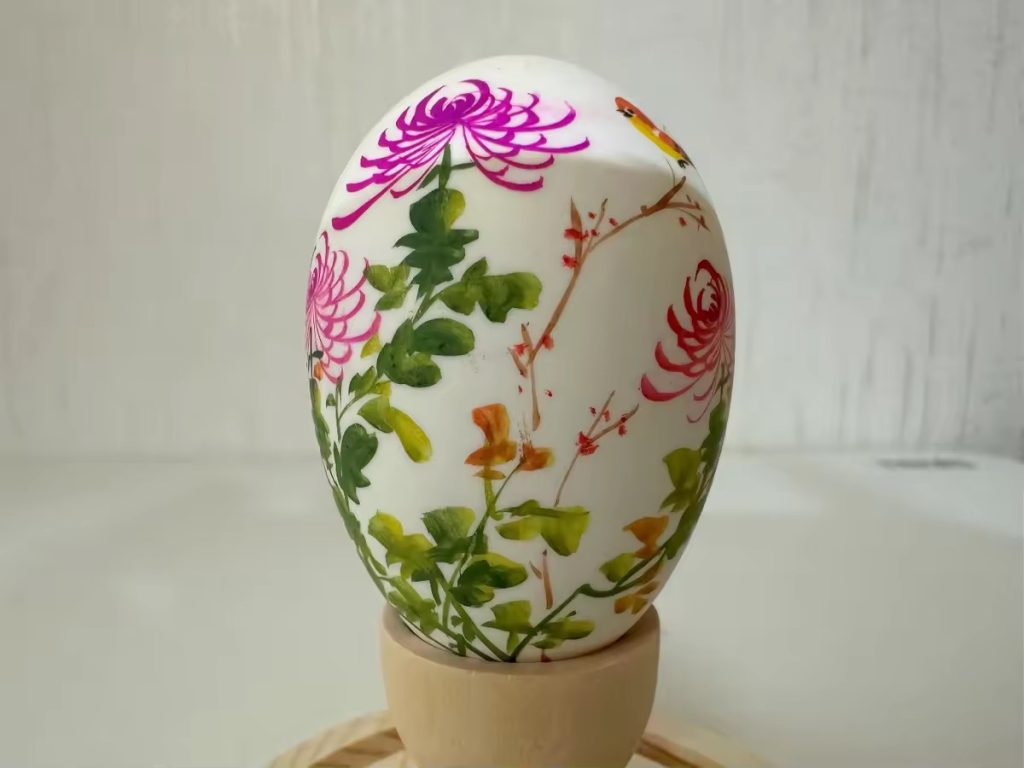
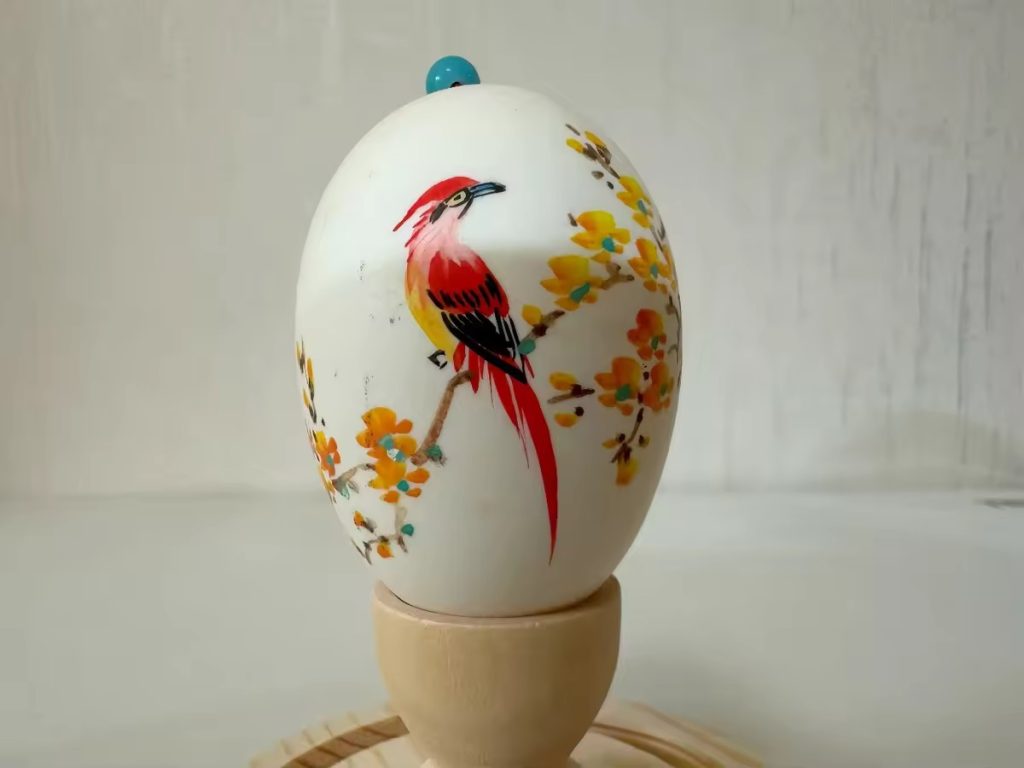
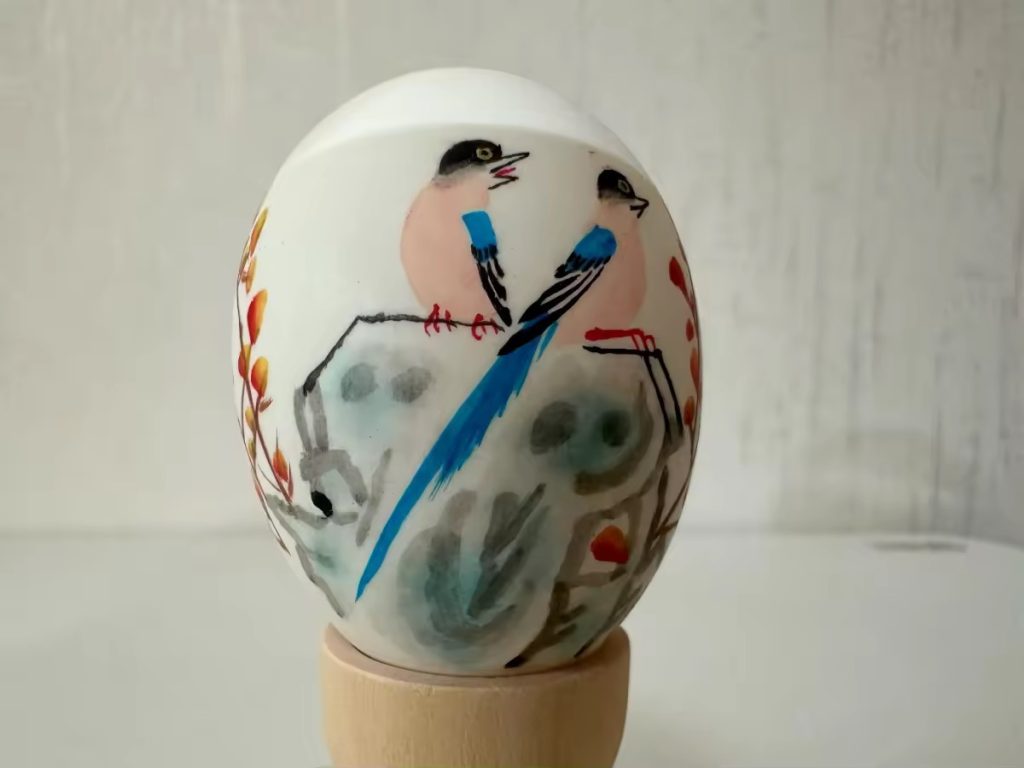
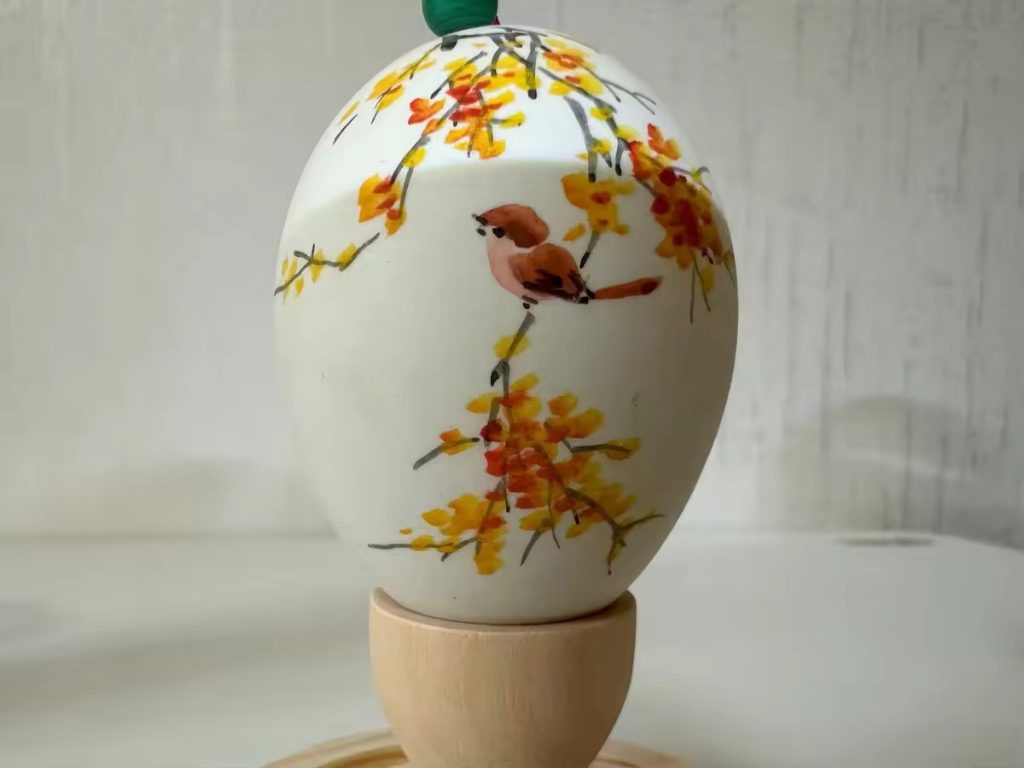
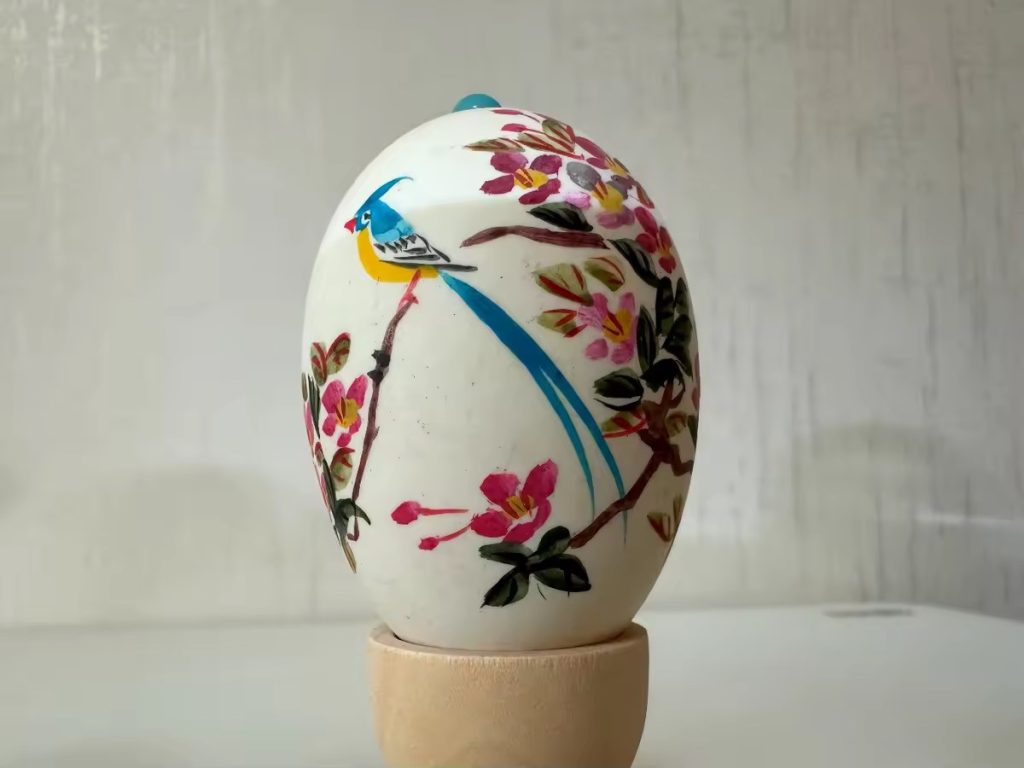
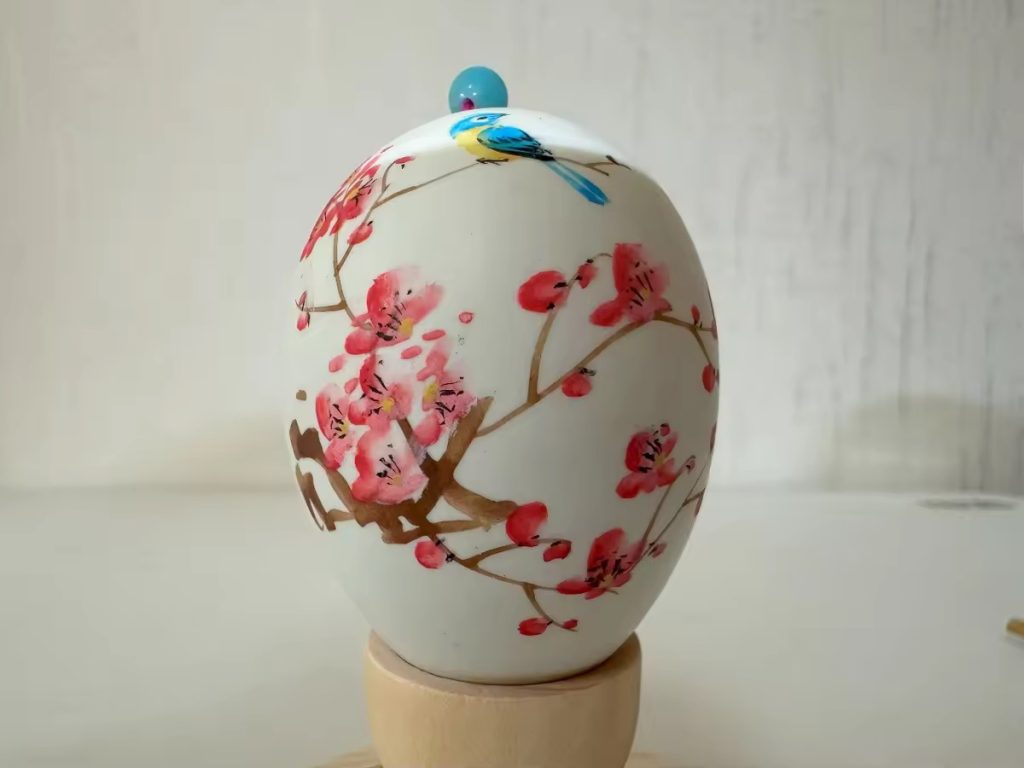
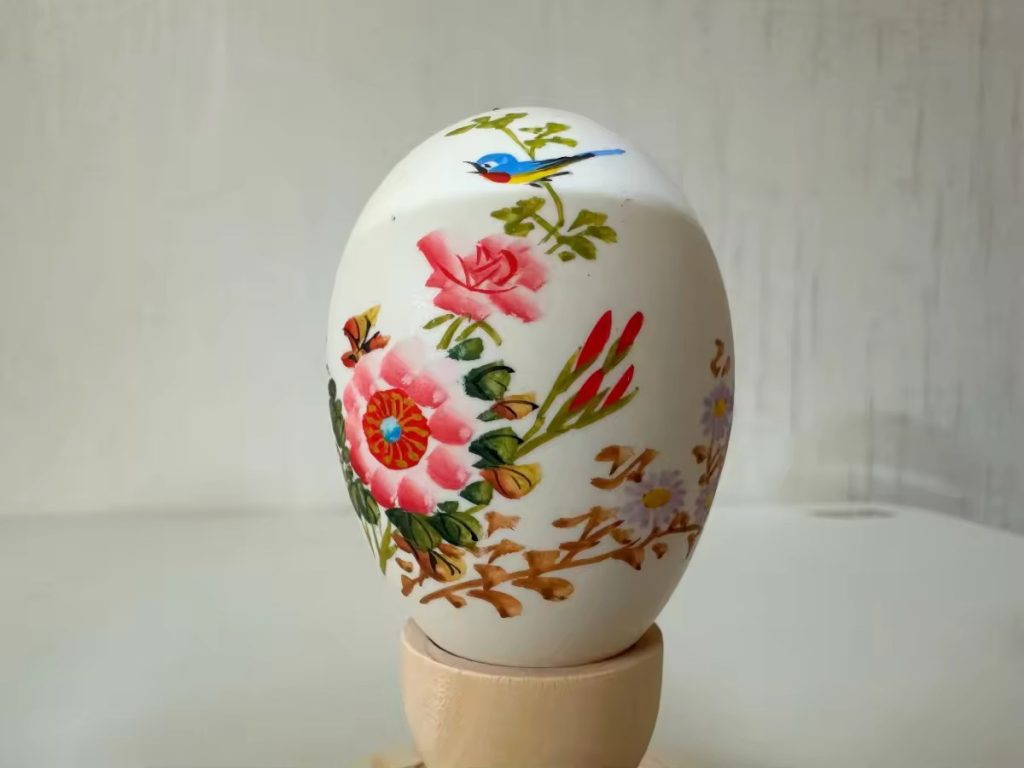
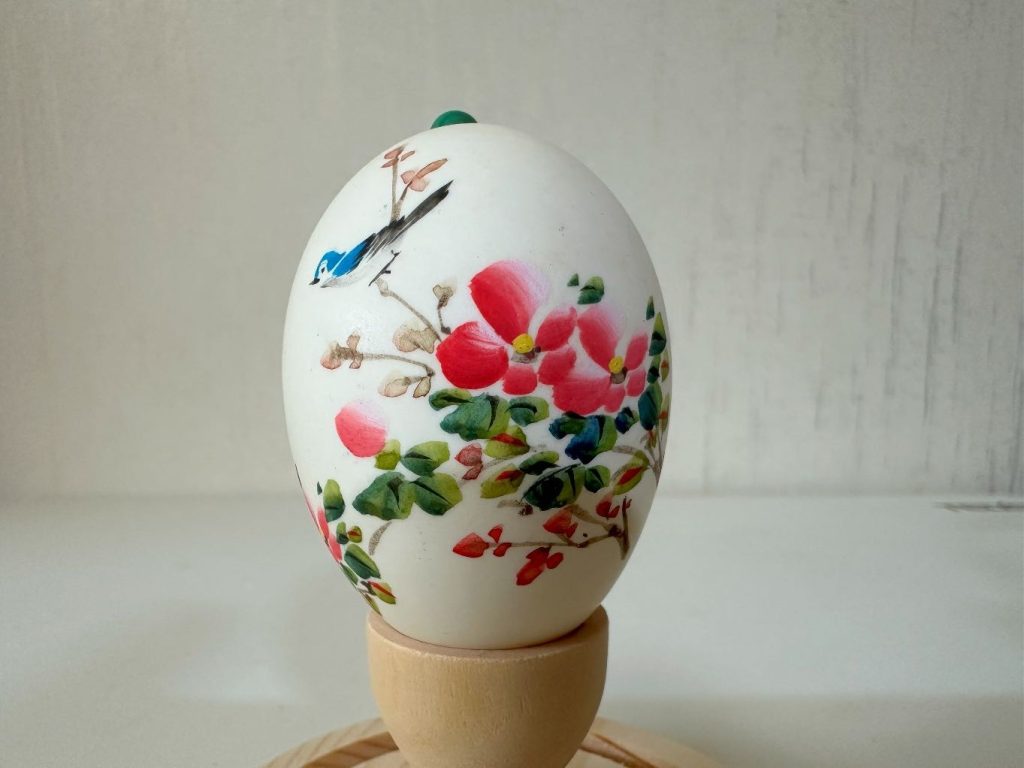
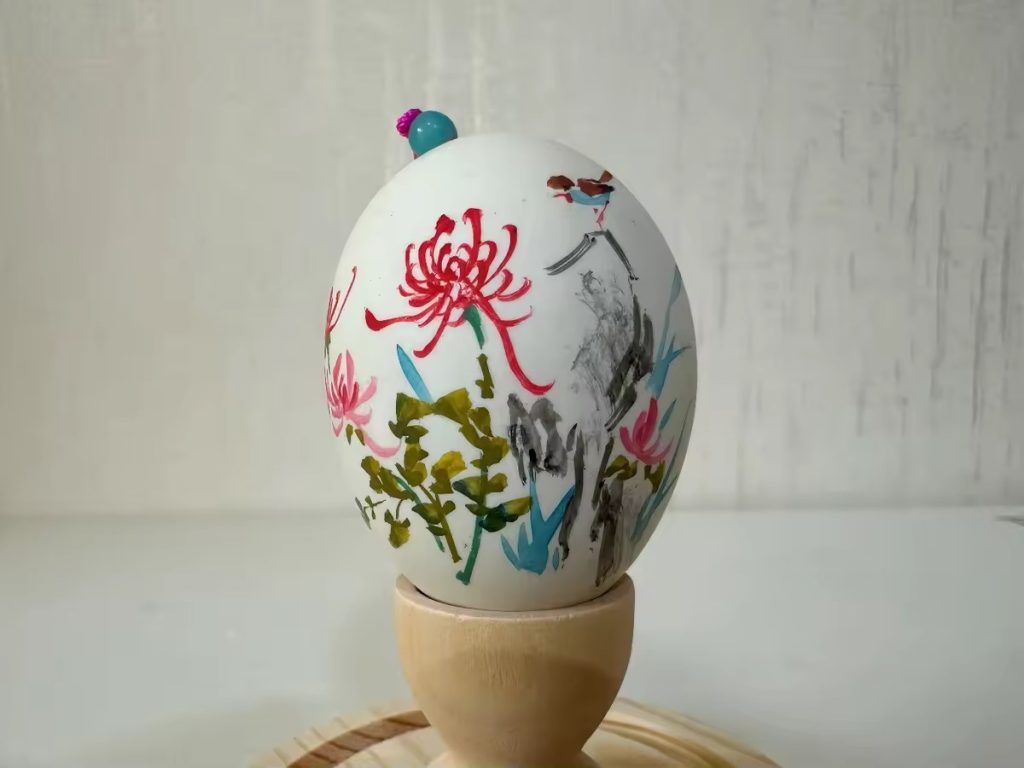
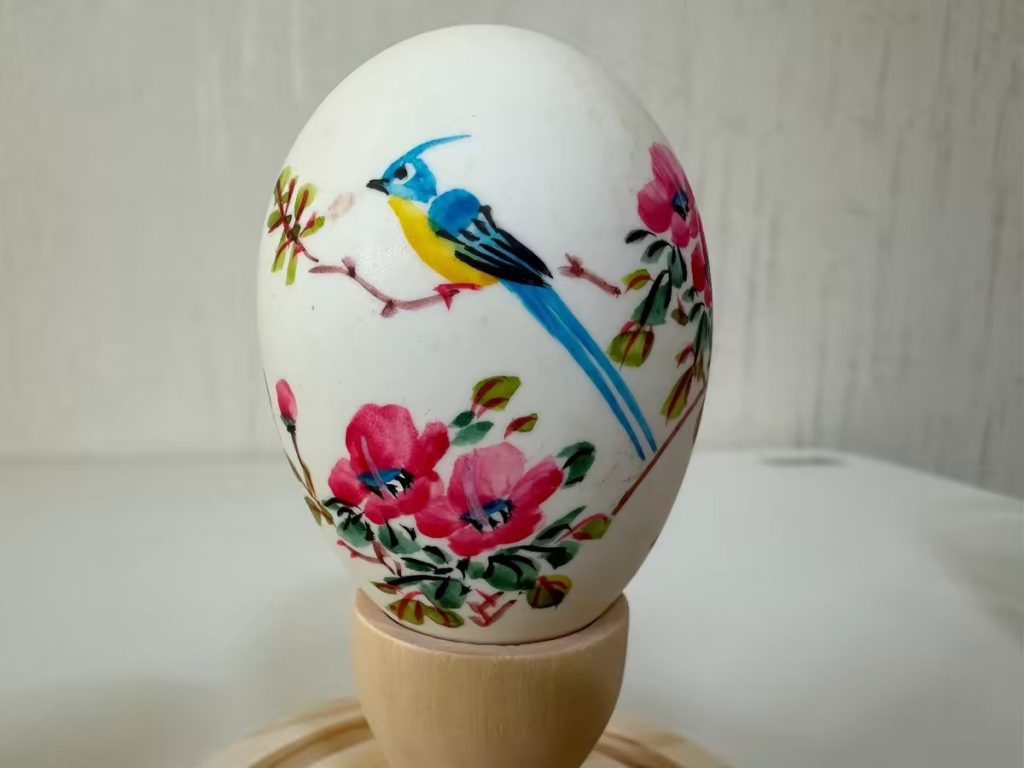
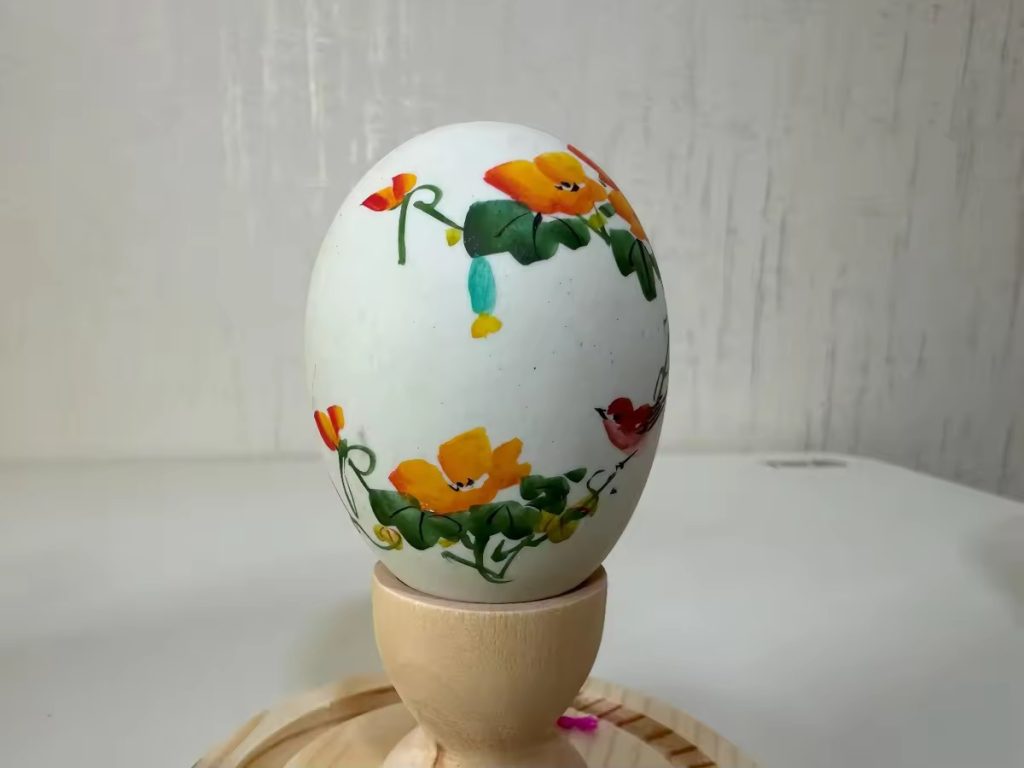
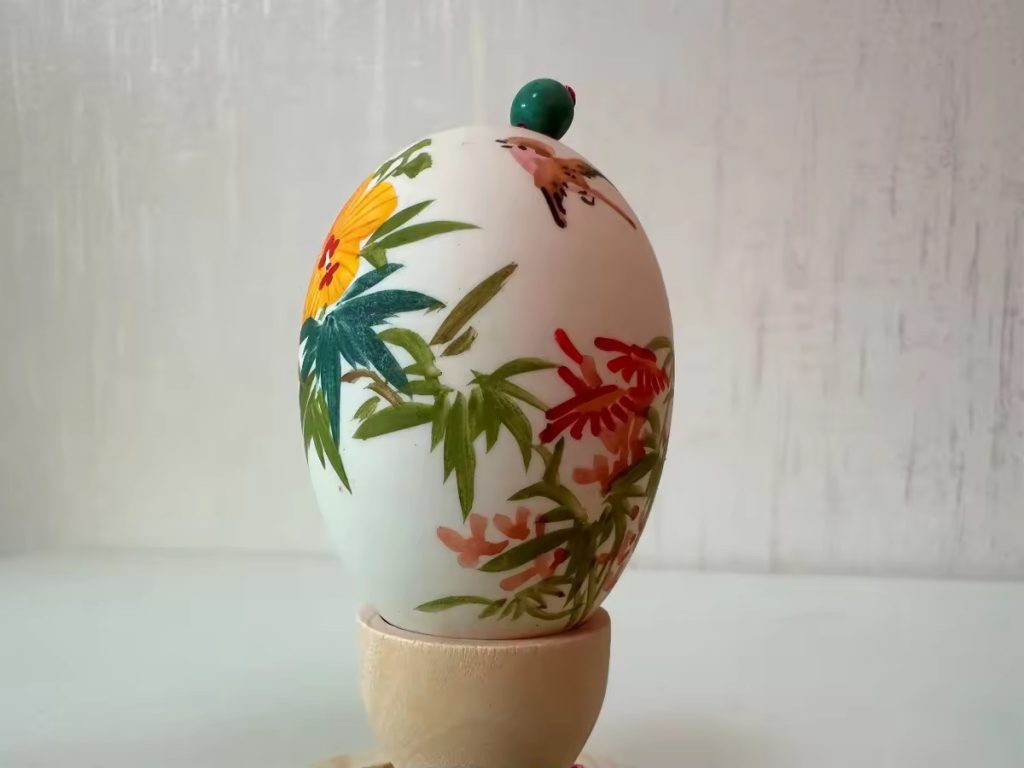
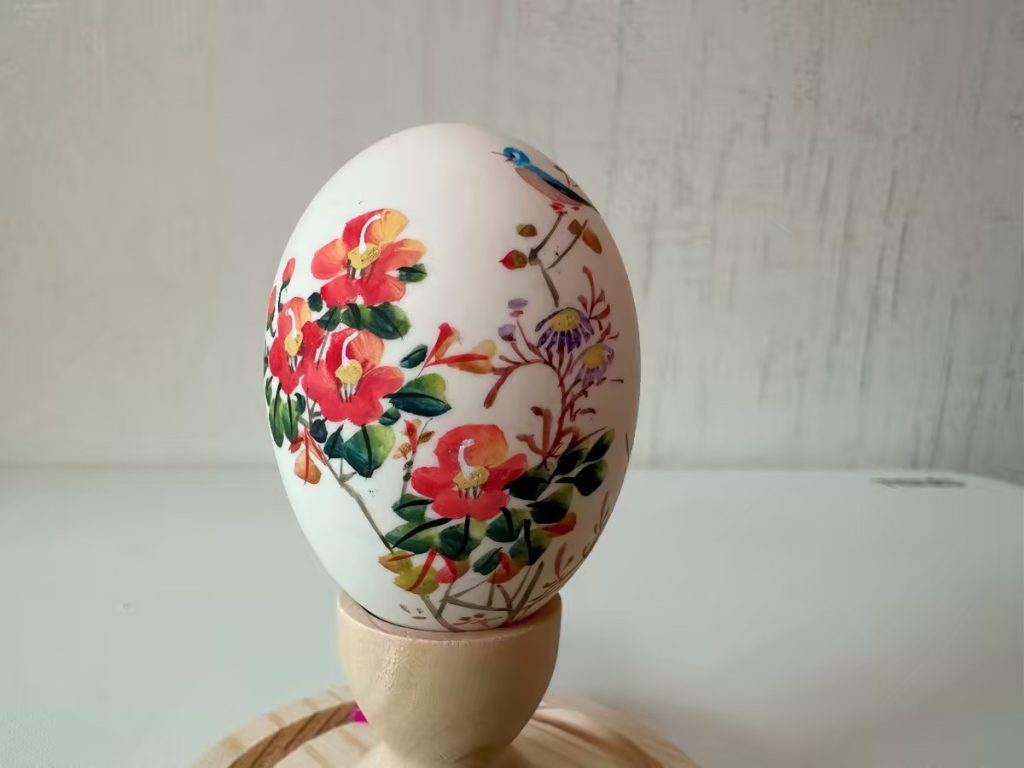
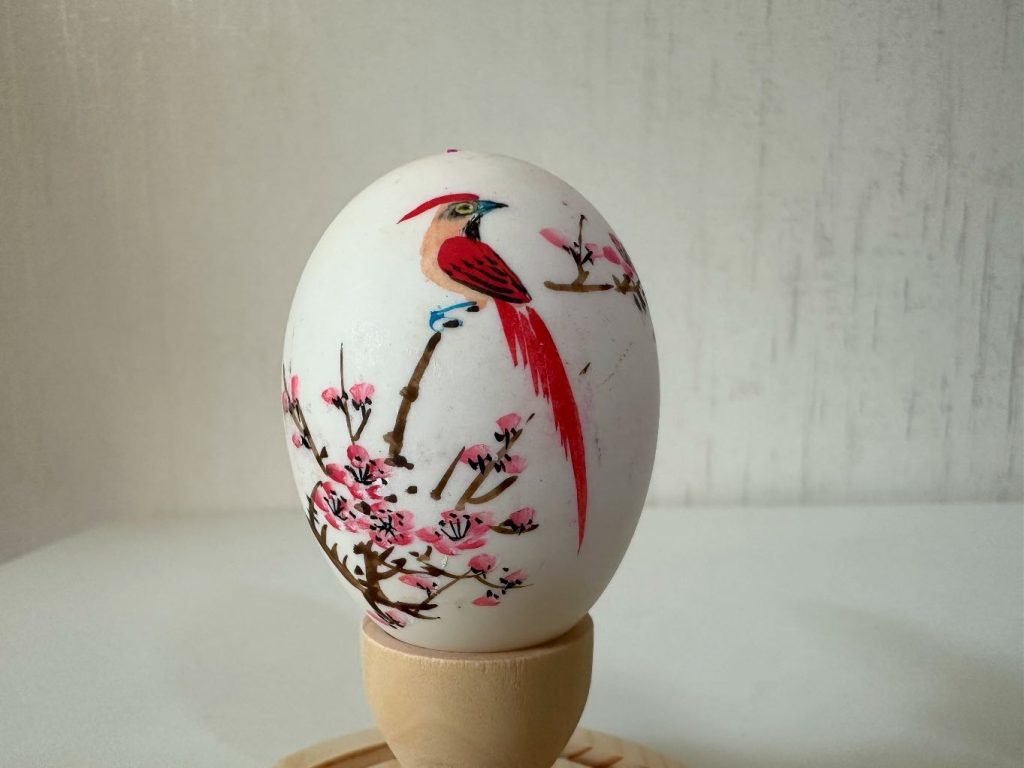
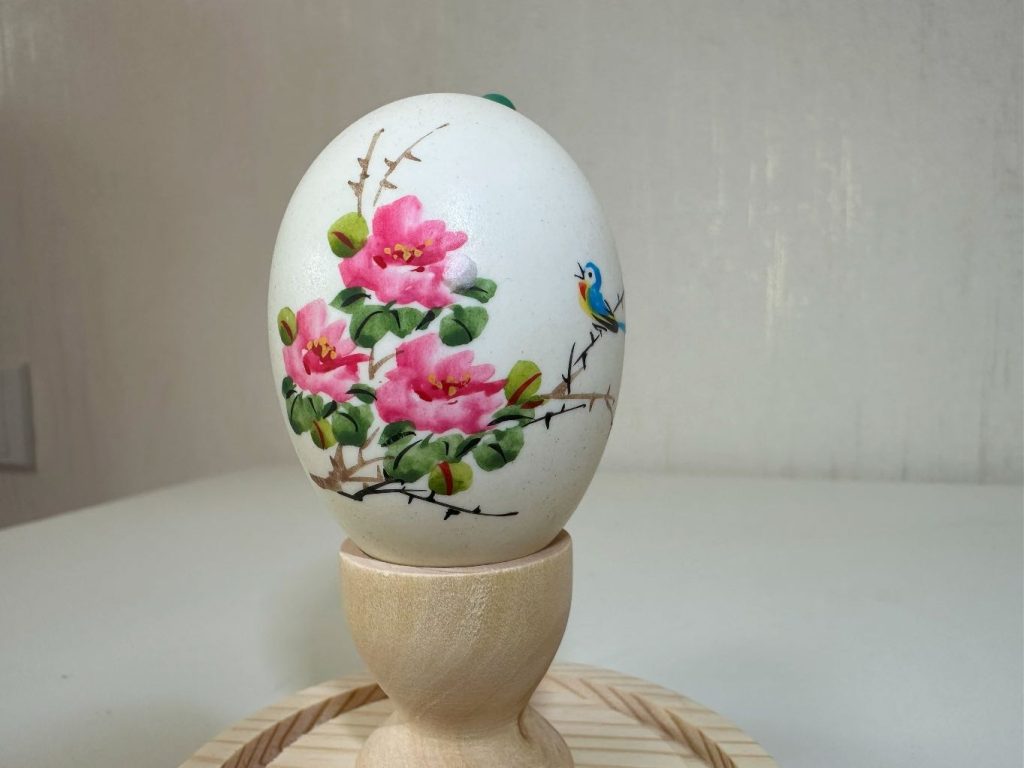
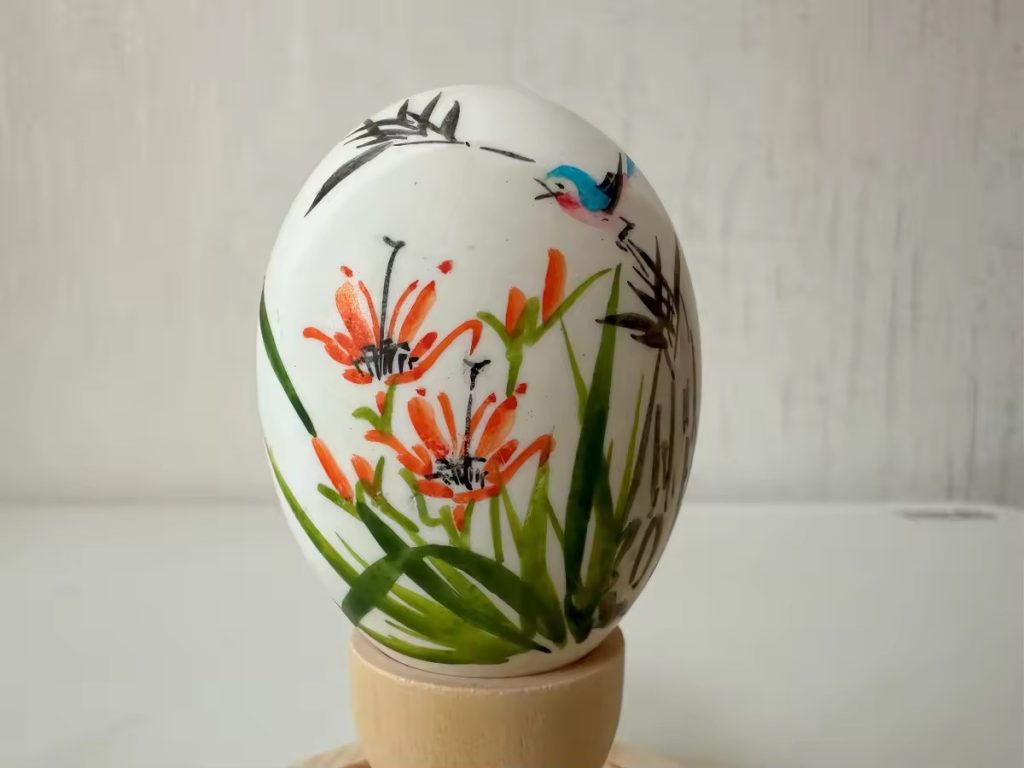
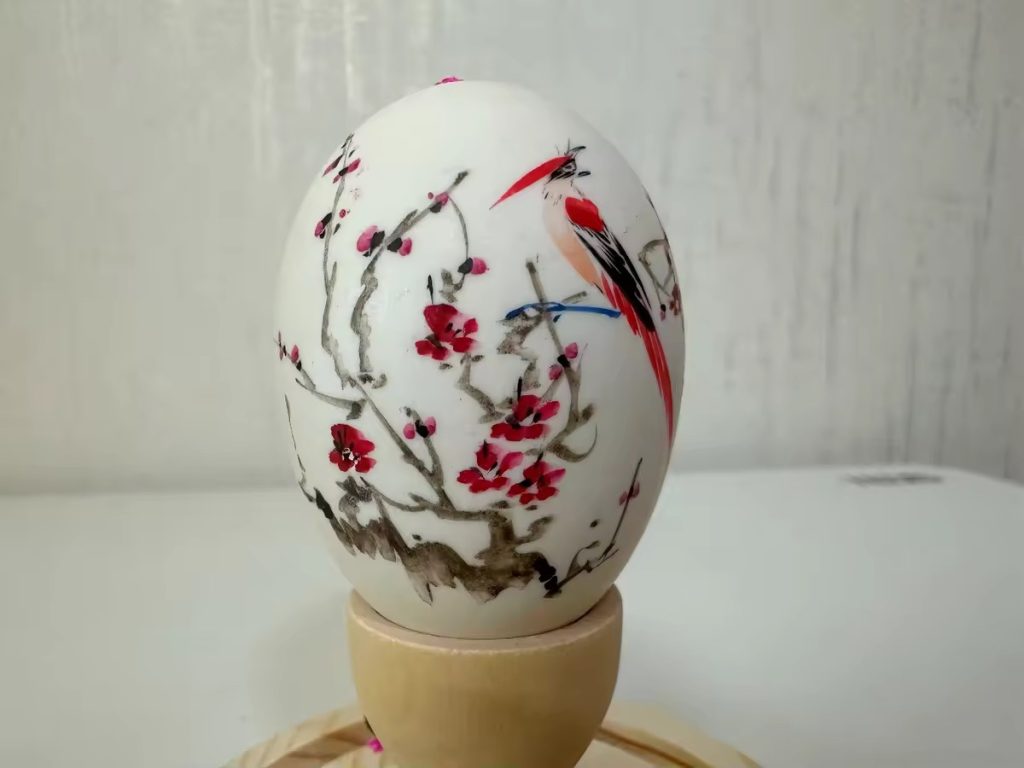
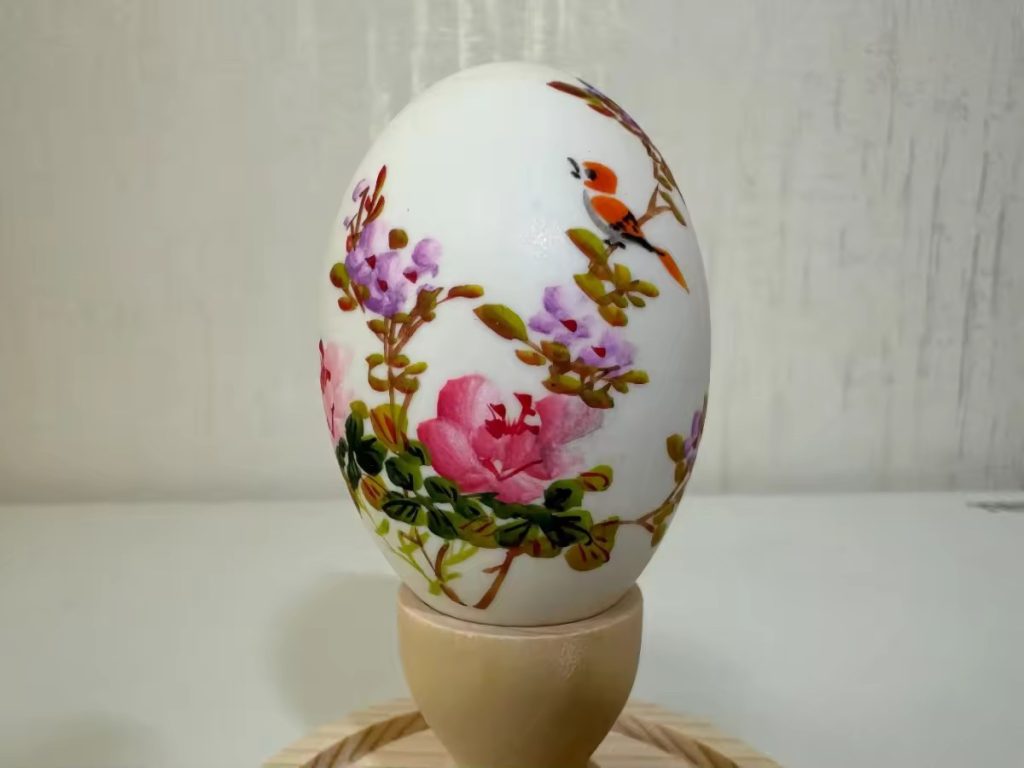
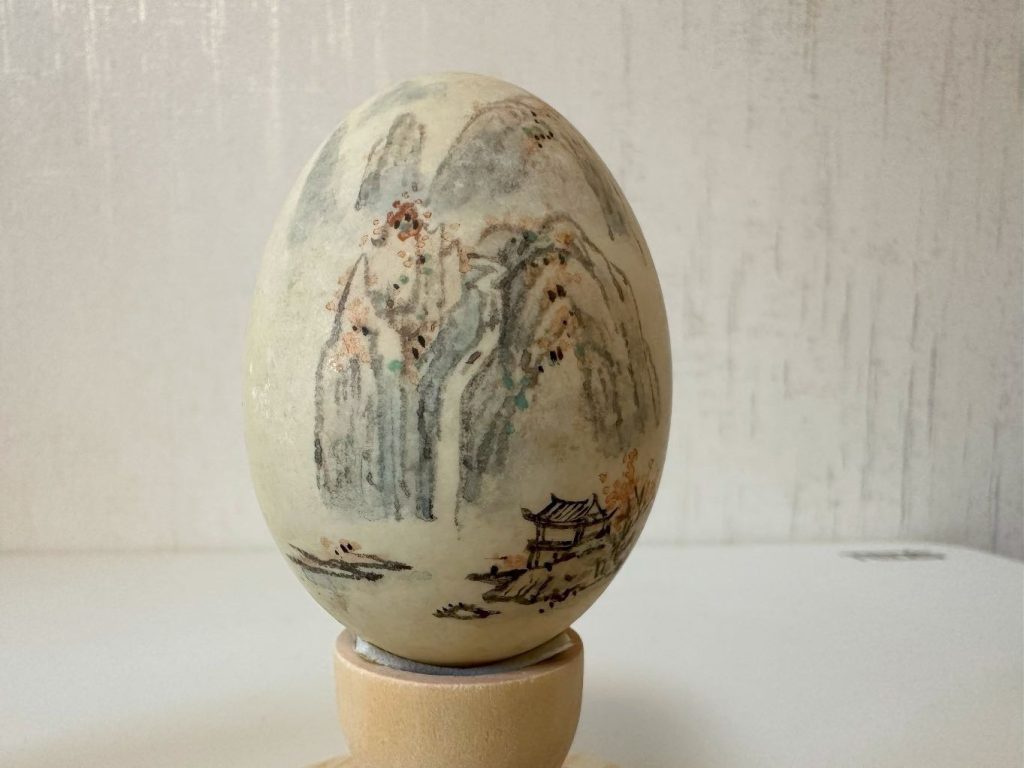
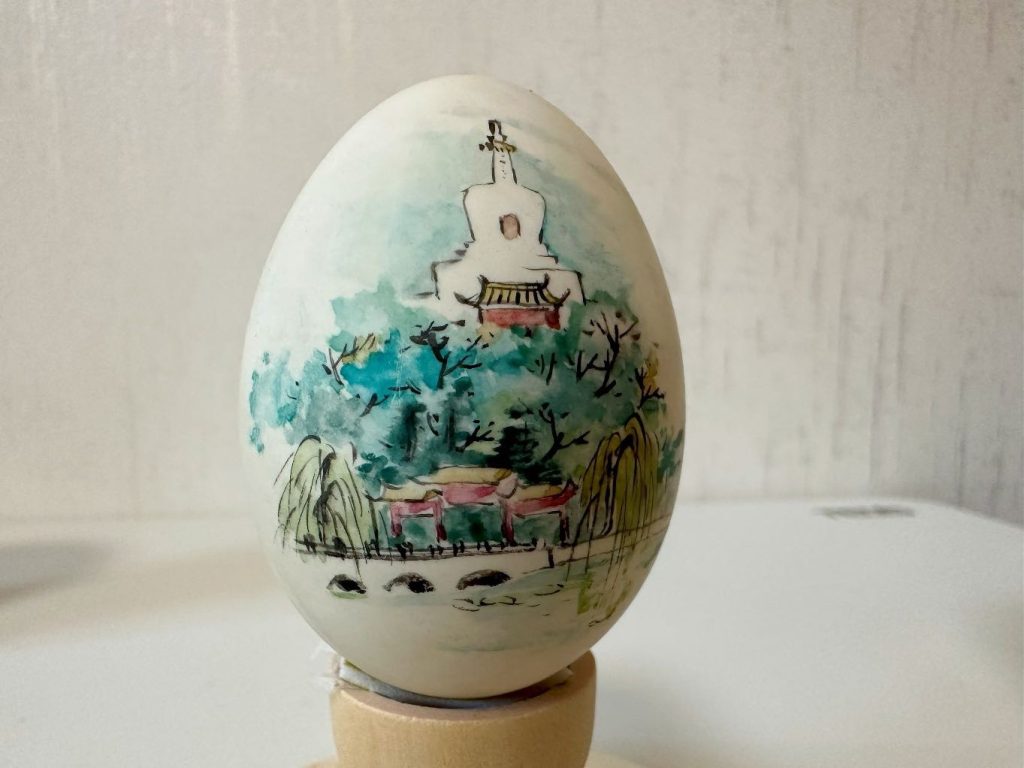
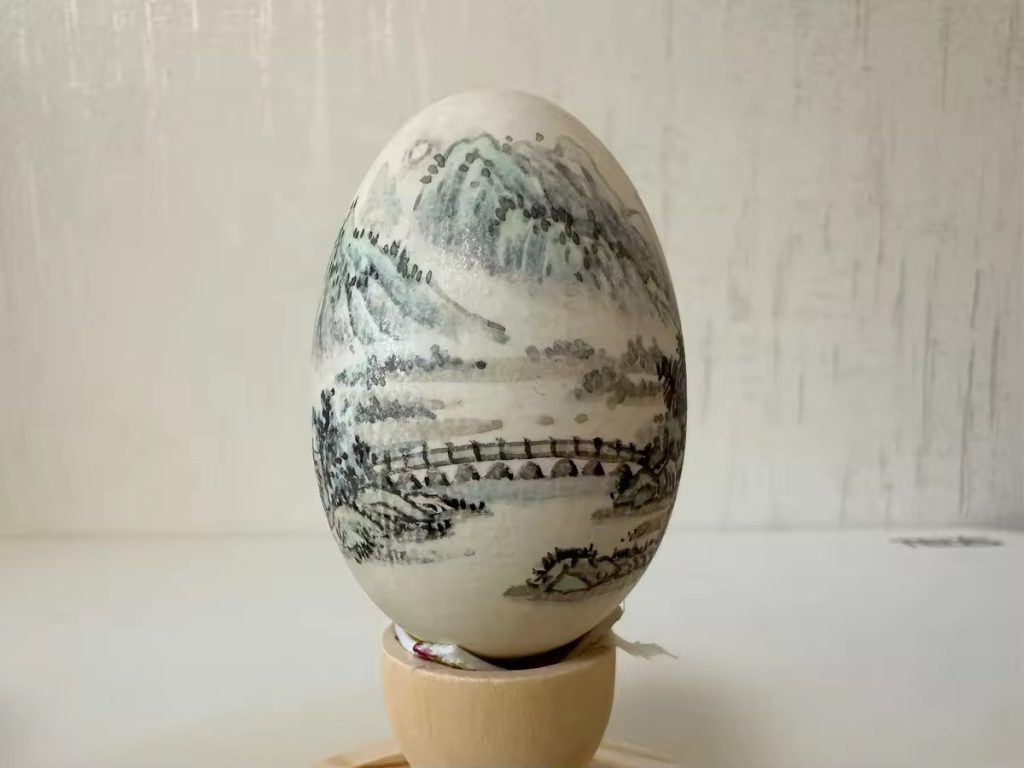
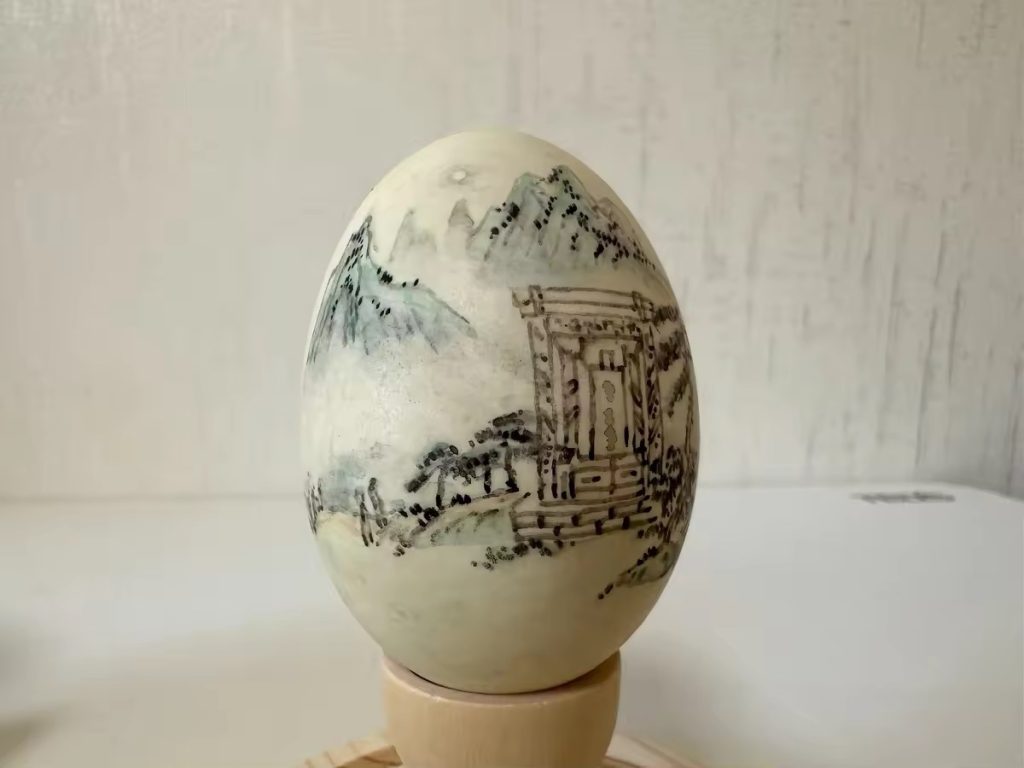
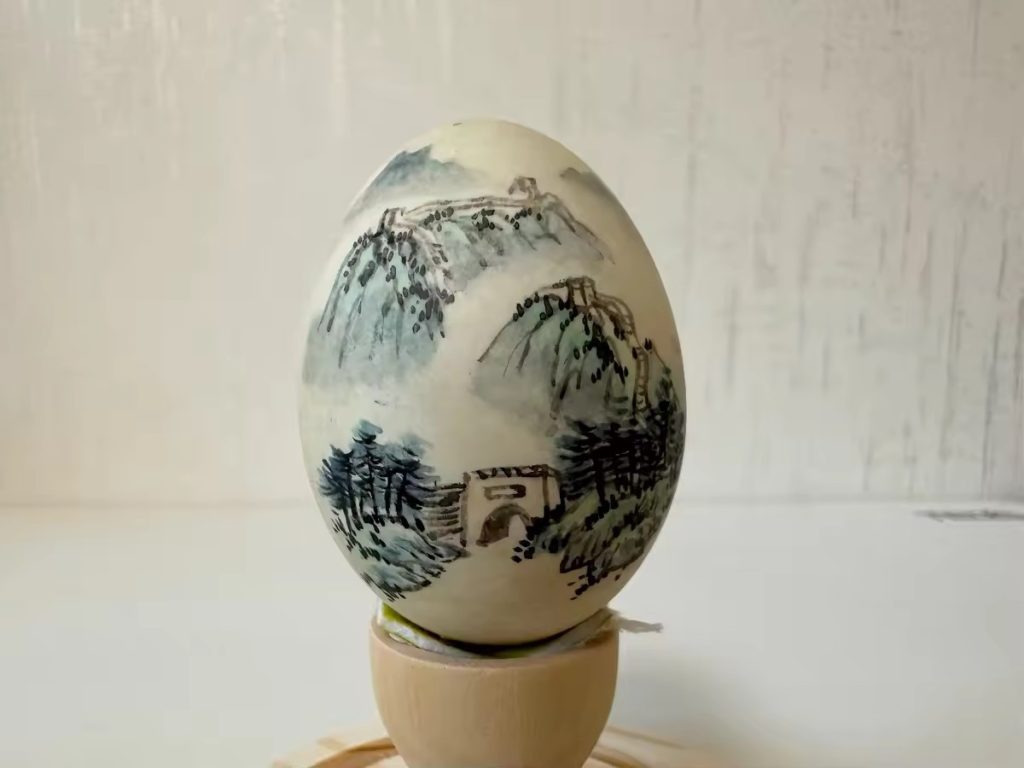
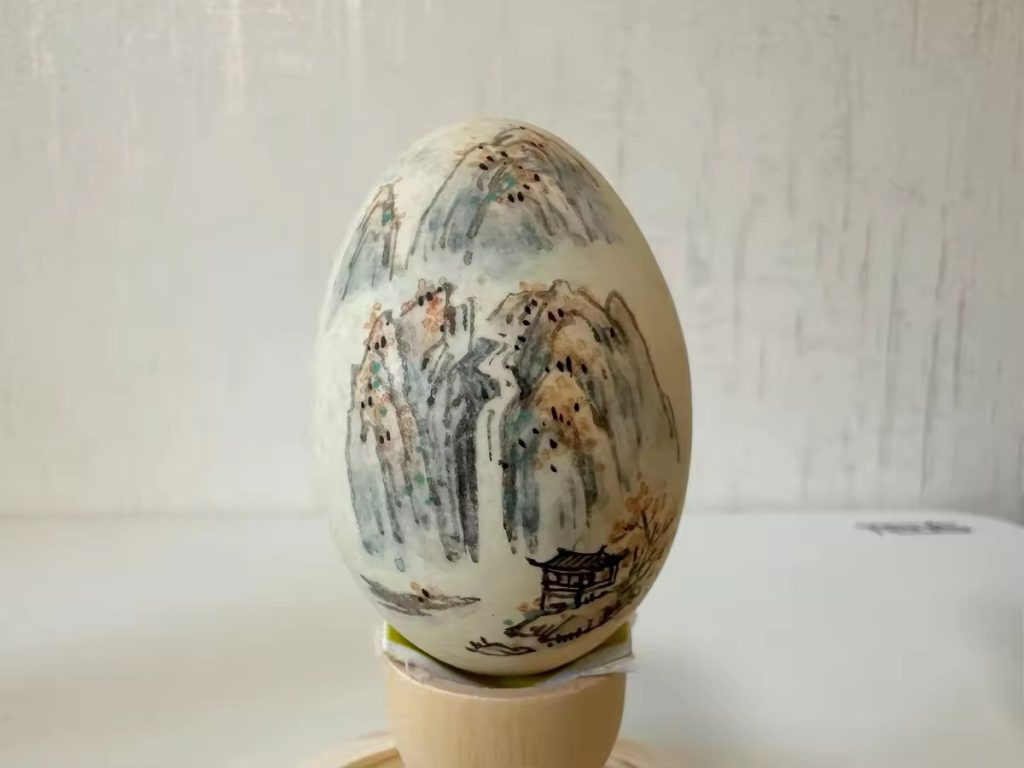
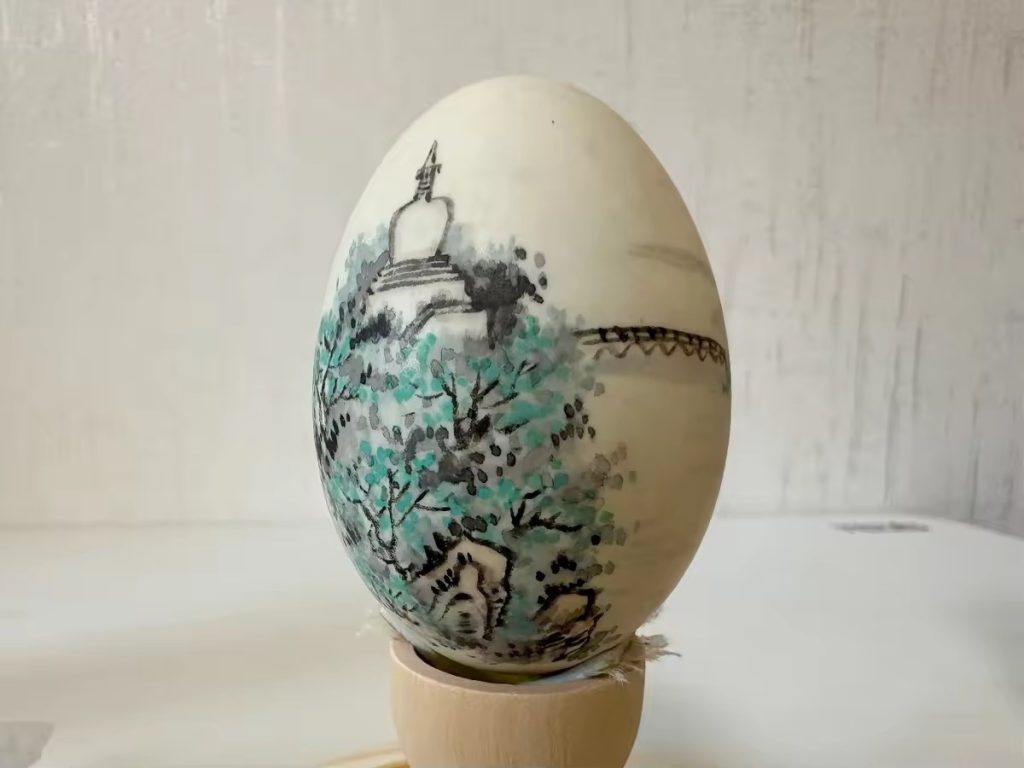
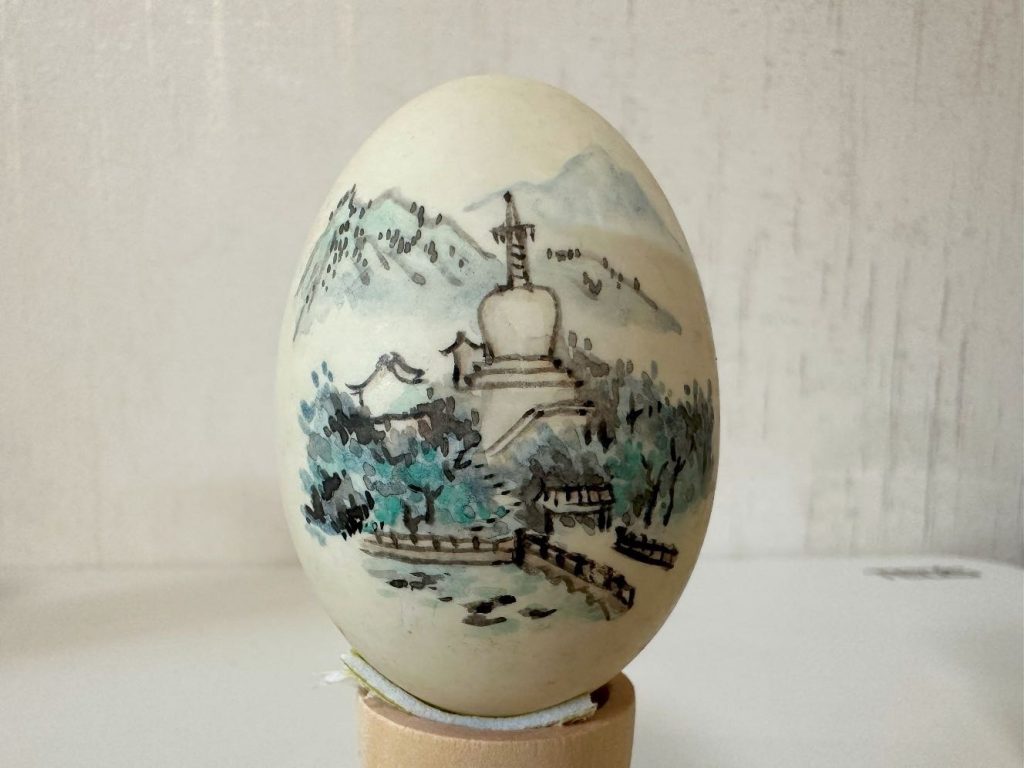
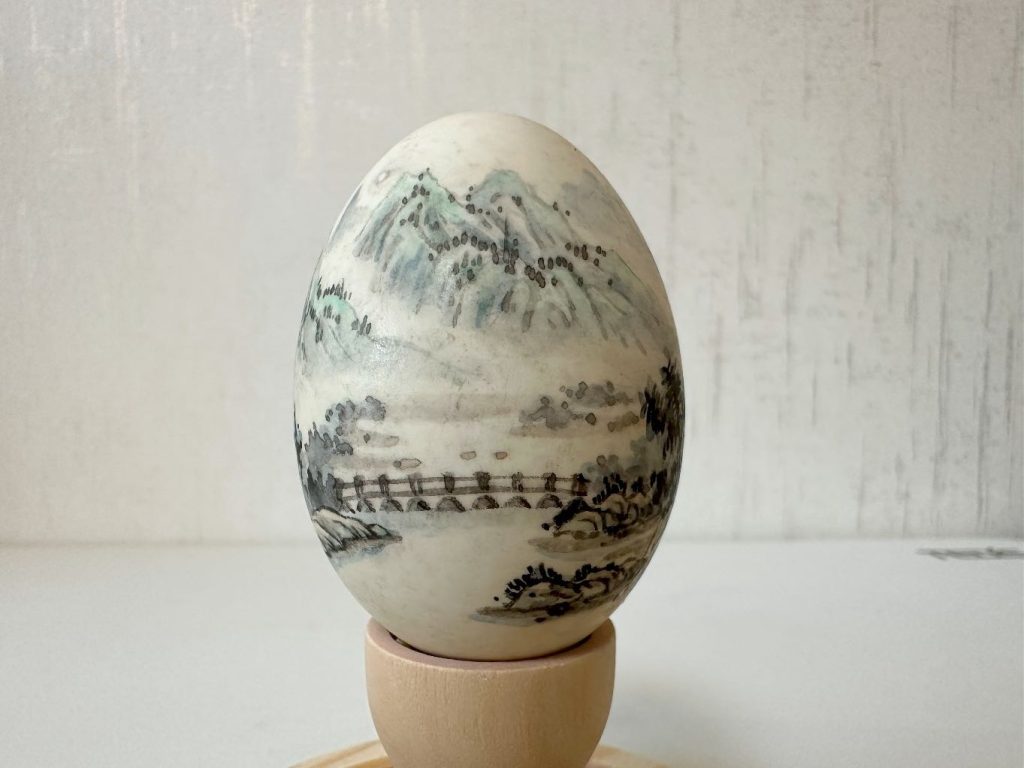
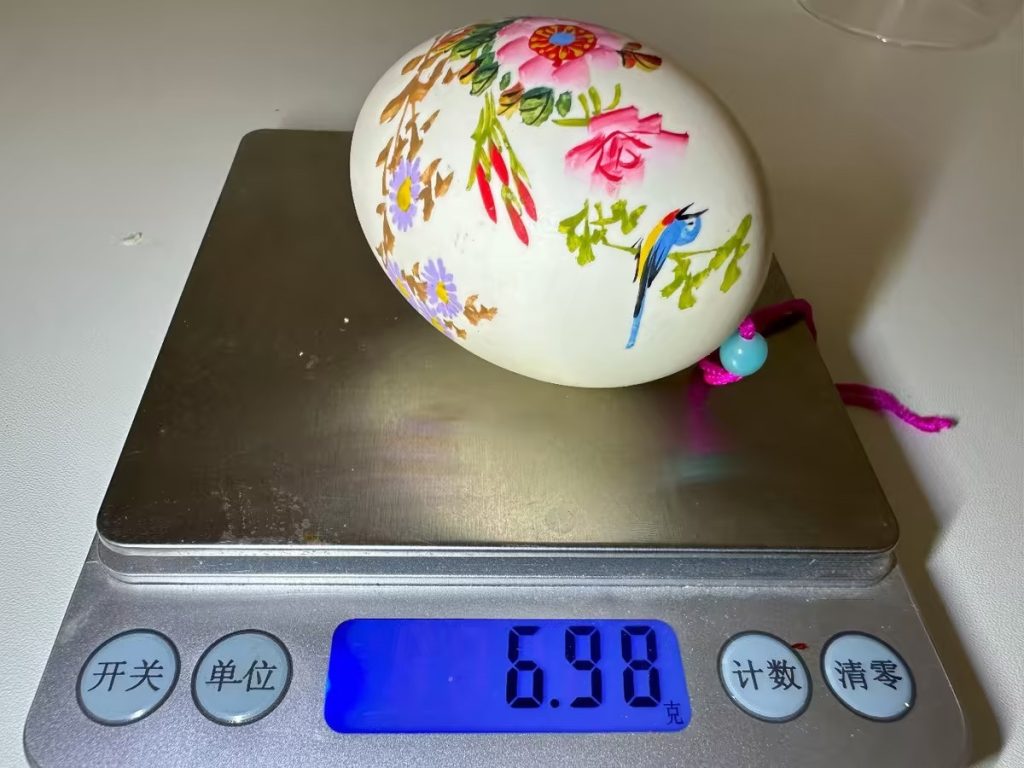
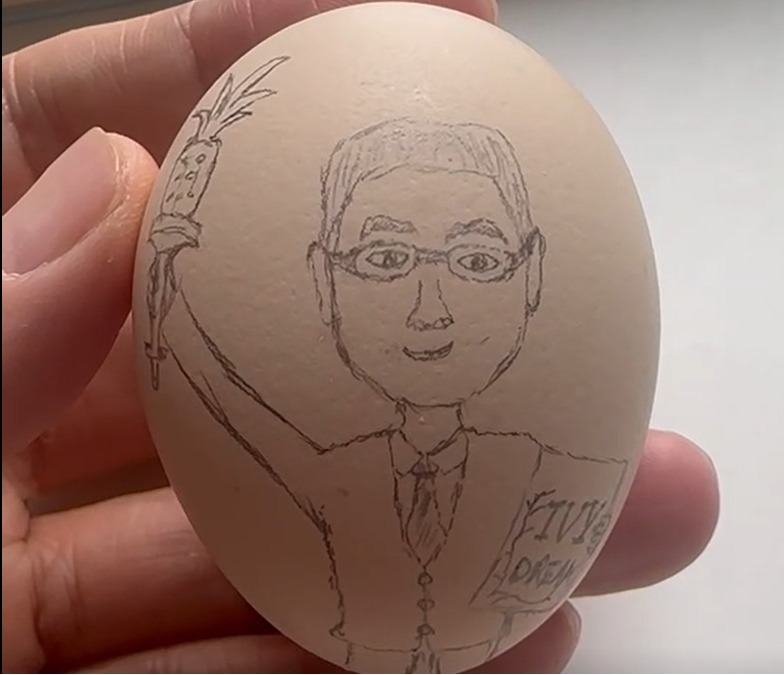
Painting: Exquisite patterns are painted onto the eggshell surface using a brush. The themes encompass landscapes, flowers, birds, insects, fish, ladies, and facial makeup from Peking Opera. Painting techniques include traditional Chinese painting methods, ethnic traditional techniques, or Western painting styles.
Post-Painting Decoration: After painting, the eggshells can be decorated with delicate Chinese knots or mounted on silk-backed paper boards or redwood stands, enclosed in glass cases to enhance their artistic appeal.
III. Artistic Features
Eggshell painting is renowned for its ability to “capture the universe within a tiny space” and possesses the following artistic characteristics:
Diverse Themes: Covering a wide range of subjects, including figures, animals, plants, and stories, such as Peking Opera facial makeup, mythological figures, landscapes, and flowers.
Varied Forms: Colored egg paintings come in various forms, such as lying flat, standing upright, single pieces, or pairs. Some are assembled into lantern or goldfish shapes, adorned with tassels at the bottom for hanging. Others are arranged in pagoda-like structures using eggshell paintings of different sizes and varieties.
Meticulous and Patient Craftsmanship: Eggshell painting demands a high level of patience and meticulousness, requiring artists to create delicate brushstrokes and showcase profound artistic prowess on the fragile eggshell surface.
Rich Cultural Connotations: Eggshell painting is not merely an art piece but also a vehicle of cultural heritage and expression, embodying profound humanistic spirits.
IV. Inheritance and Innovation
On the basis of inheritance, eggshell painting is also constantly exploring paths of innovation:
Theme Innovation: Artists are beginning to integrate modern elements into traditional eggshell painting, such as incorporating themes from movies and animations to attract younger audiences.
Form Innovation: In addition to traditional painting forms, some artists are experimenting with combining eggshell painting with other art forms, such as carving and embroidery, to create more diverse works.
We learned the art of egg painting and gathered a collection of egg painting works from the 1950s and 1960s. We then categorized and organized these pieces, compiling them into an album.
Eggshell Painting Gallery